



spacebands is a multi-sensor wearable that monitors external, environmental hazards, anticipates potential accidents, and gives real-time data on stress in hazardous environments.
Members of:





Recognition:





In high-hazard industries, completing training and proving competence are not always the same thing.
Sam Slater has spent more than 30 years working across nuclear, defence, oil and gas, and pharmaceuticals, progressing from an engineering apprentice to leading complex projects before founding the Ikigai group of companies. Today, his work focuses on using immersive technology, behavioural science and real-world performance data to make workforce training more effective.
We spoke to Sam about the gap between paper compliance and genuine competence, where traditional safety training can fall short, and how VR, AI and continuous performance data could reshape workforce safety in the years ahead.
I started out at GSK in 1995 as an EC&I Technician, training on a structured route rather than going straight into a role - at the time, that was seen as a genuine job for life, and it gave me a grounding in hands-on, practical competence that's stayed with me for 30 years since. From there I moved into commissioning engineering with Halliburton in Aberdeen, then Shell, before moving into project management, first at AWE Aldermaston and then a decade at Sellafield, leading some of the UK's most complex nuclear projects and working across both client and supplier sides of complex, multi-million pound commercial frameworks. I studied for a BEng in EC&I Engineering and later an MEng in Advanced Control Systems and Neural Networks alongside that operational experience.
After that operational career, I spent several years leading an energy sector business before founding IkigaiXR to focus on a specific, evidenced problem I'd seen first-hand: that immersive training only works if it produces genuine skill transfer, not novelty engagement. XR2train grew out of that as the platform to deliver it at scale, blending e-learning, certified courses and VR/XR in one system, and Ikigaico now also includes The Consultancy Hub, helping high-specialism SMEs navigate market access into regulated UK Nuclear, Defence and Critical Infrastructure supply chains, drawing directly on my own experience on both sides of those procurement frameworks.
What these industries consistently get right is process: documented procedures, incident reporting, hazard identification, formal sign-off before high-risk work begins. That discipline is genuinely hard-won and shouldn't be understated.
Where they still fall short, in my experience, is treating training as something you complete rather than something you can verify. A certificate confirms someone sat through a course; it doesn't confirm they'd make the right call under fatigue, time pressure or an unfamiliar variation of a familiar task. I've seen that gap directly - qualified, inducted, competent on paper, and still caught out by the difference between generic instruction and a live, pressured environment. We have much more data to use now for recognising patterns and responding with training accordingly but that very rarely happened, just the same box ticking. Through technology like IoT, wearables and ‘intelligent’ systems the datasets are rich and meaningful if utilised properly. Leading indicators as they are more commonly known, are the most underused benchmark in my opinion.
It's made me sceptical of providers who sell a product before understanding the client's actual operating environment. From the client side, I've seen how often training is procured to satisfy an audit requirement rather than to close a genuine competence gap. From the supplier side, that's shaped how we work: every engagement starts with a research and specification phase directly with the client's own safety leadership and subject matter experts, understanding the real task and hazard before any content gets built. Organisations don't need another course library. They need training that reflects how the job actually gets done.
It looks like someone who has completed every required course, holds every certificate, and is still unprepared for the specific, situational version of a task they haven't encountered before. Generic instruction teaches the standard procedure. It rarely rehearses the moment where a bumped schedule, a fatigued colleague, or a piece of kit behaving slightly differently forces a judgement call. That's exactly the moment competence is actually tested, and it's the moment classroom-based and paper-based training struggles to touch without real application, whether through hands-on experience and training or through immersive technologies. We focus a lot on human psychology and how we behave in different situations, and instinct is critical. We've found that learning something and then applying it in a practical situation is what builds muscle memory, that shift where a skill moves from being a conscious, effortful process, handled by the more deliberate, decision-making parts of the brain, into something the basal ganglia and cerebellum can run automatically, instinctively, without conscious thought. That's where real competence comes from.
Yes, absolutely, and it's more common than most organisations would like to admit. The warning signs are rarely in the training records themselves, but in real-time operational data: near-miss patterns that cluster around specific tasks despite everyone involved being 'fully trained'; in experienced staff describing a procedure differently to how it's written down; and in inductees who can recite a safety rule but hesitate when asked to demonstrate it under a slightly different scenario. If your operational data and your training completion data tell two different stories, that's the gap.
Because they teach information, not judgement. Most traditional methods are built to transfer facts and procedures efficiently, which they do well, but safe behaviour under real conditions depends on pattern recognition and instinct built through repetition and feedback, not recall. A great example is the driving test: it teaches you the rules of the road, how to operate a car, how to perform the manoeuvres, but it doesn't teach you how to respond to a driver tailgating you, or a blowout on a motorway. Experienced workers develop what I'd call automaticity, the unconscious, practised competence that lets them handle the routine parts of a task without conscious effort, freeing attention for what's actually novel or risky. Traditional training rarely builds that; it tests whether you know the answer, not whether you'd act correctly under pressure.
By capturing evidence of applied performance, not just attendance. That means scenario-based assessment where a worker has to demonstrate a judgement call, not just answer a multiple-choice question; it means field-testing whether trained behaviour actually shows up in real task performance, not just assuming it will; and it means treating operational data, training data and safety/incident data as one connected picture rather than separate compliance systems that never talk to each other.
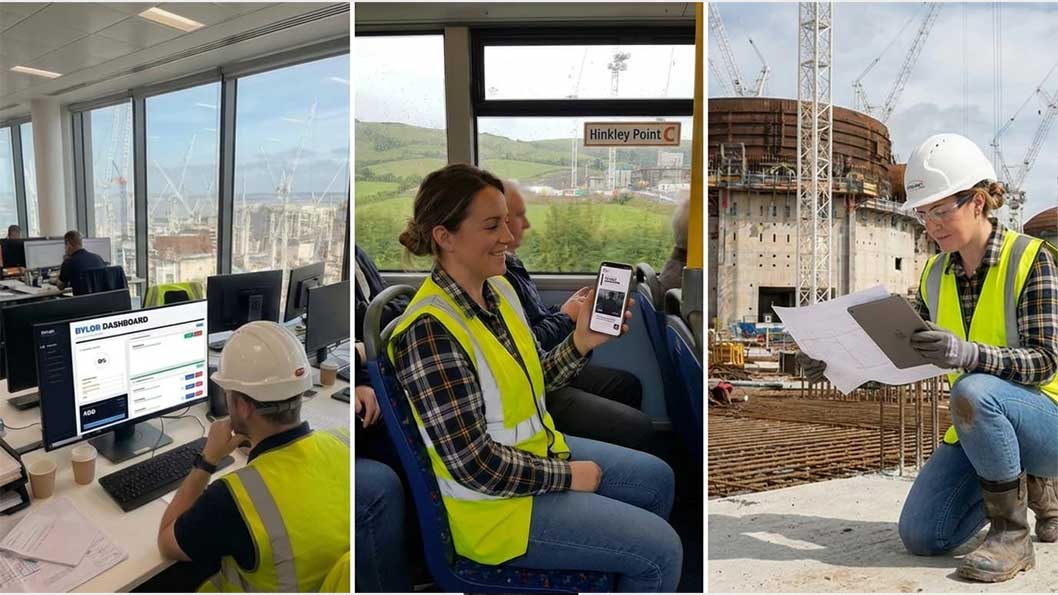
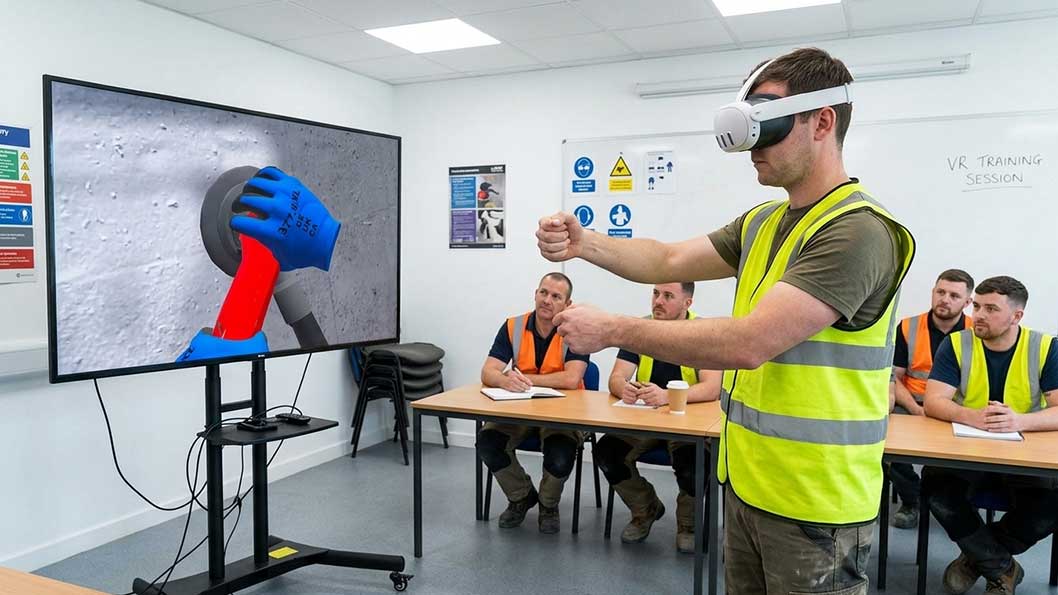
VR/XR earns its place where a task is physically hazardous, expensive or impractical to rehearse repeatedly in real life, or where the consequence of a mistake is too severe to risk during learning, working at height, high-hazard procedural tasks, equipment operation with real injury risk. Conventional or e-learning-based training is often still the better, more cost-effective option for knowledge-based content, policy awareness, or inductions where the goal is information transfer rather than physical or judgement-based skill. Part of what we've built XR2train around is not defaulting to VR for everything; the platform blends e-learning, certified courses and VR/XR precisely so the delivery method matches the actual skill being taught.
If it is designed properly, it reveals what someone actually does when a scenario unfolds in front of them, not what they'd tell you they'd do. A multiple-choice question tests recall of the correct answer. A well-designed immersive scenario can show hesitation, incorrect sequencing, or a worker defaulting to habit under simulated pressure, the same failure modes that show up in real incidents. That's genuinely diagnostic information a written assessment structurally can't capture.
What changes minds is field evidence that trained behaviour transfers to real-world performance, not a demo. We've deliberately built structured field testing into our own engagements for exactly this reason, assessing whether a behaviour trained in VR actually shows up in how someone performs the real task afterwards. Impressive visuals convince people in a five-minute demo. Evidence of behaviour change convinces a safety director.
For us, it's the combination of safer practice and improved assessment, with retention as a byproduct rather than the goal. If training genuinely produces safer real-world behaviour and gives you a reliable way to verify that it has, retention takes care of itself. Chasing retention as the primary metric is, I think, part of how the industry ended up over-indexed on paper compliance in the first place.
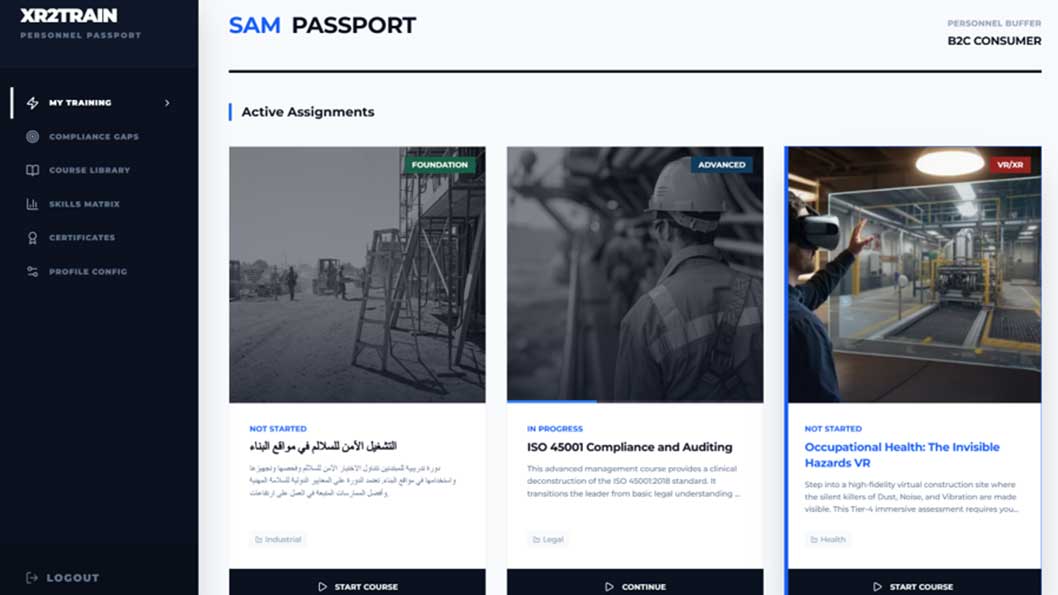
I think AI is largely misrepresented for most real-world use cases, mainly because of the media hype around it. It gets talked about as this magical technology that will replace everything and anything, when in most practical applications, ours included, it's simply there to recognise patterns in massive datasets, something humans are genuinely bad at doing consistently at scale, not to replace human judgement. Where it has real, immediate impact for us is adaptive learning, tailoring content, pacing and reinforcement to the individual learner rather than delivering identical training to everyone, and automated compliance reporting, giving employers real-time visibility of training status and certification currency instead of manually tracked spreadsheets. Both are already live capabilities within XR2train, and I think they'll become baseline expectations across the industry within a few years, not a differentiator.
Transparency and purpose matter more than the technology itself. Monitoring introduced to catch people out breeds exactly the behaviour you don't want, people performing for the assessment rather than engaging honestly with it. We work with behavioural science advisory input specifically to make sure the human/machine interface in our platform is designed around genuine engagement and learning support, not surveillance. Framing matters too: monitoring positioned as 'helping us understand where training needs to improve' lands very differently to monitoring positioned as 'checking up on you'.
Yes, and I think that shift is already underway. Annual refresher training is a calendar-driven compliance artefact, not a genuine measure of ongoing competence. Continuous, dashboard-based visibility of training status, completion and, increasingly, field-tested performance data gives employers and regulators a much more honest, real-time picture than a periodic tick-box exercise ever could.
The idea that a certificate, on its own, is sufficient evidence of ongoing competence. I think in five years, credible compliance will require some connected evidence of applied performance, not just a course completion date, and organisations still relying purely on certificate-based compliance will look the way paper timesheets look today.
A strong safety culture treats a near-miss as valuable information which drives meaningful, integrated and measurable change; an organisation good at documenting compliance treats it as a box that needs closing out. The tell is usually in how leadership responds when something goes slightly wrong but nobody was hurt, whether that becomes a genuine learning moment or a paperwork exercise.
Lead with evidence, not technology. Highly regulated industries are cautious about change for good reason, and pitching impressive technology first invites exactly that scepticism. What's worked for us is starting every engagement with a genuine research and specification phase alongside the client's own safety experts, and being honest about where our evidence base does and doesn't yet extend. Being appointed to public sector frameworks has helped too, it gives cautious buyers a form of independent validation before they have to take a risk on an unfamiliar supplier directly.
Scaling globally, and building out the platform's hazard coverage in genuine depth rather than just breadth. We're currently mapping typical hazard families, HAVS, noise, silica dust and others, across multiple regions and industry verticals, construction, mining, rail, nuclear, general industry, with jurisdiction-specific annexes for places like Abu Dhabi, Dubai, Qatar and Saudi Arabia, or BC, Ontario and federal Canada. The problem we're solving there is real: companies with mobile workforces spanning multiple countries currently rely on separate regional training providers per site, which means inconsistent standards, no central visibility, and no unified audit trail. XR2train uses one content architecture that flexes by region, industry and jurisdiction while staying centrally reportable.
The mechanism for that is ensuring a demonstrable golden thread in everything we deploy, courses built in complexity blocks that share a common regulatory and conceptual thread: T1 foundation content for low-skilled workers, T2 standard e-learning depth, T3 certified content aligned to IOSH and CITB, and T4 immersive WebGL/VR/XR for applied practice. That lets an employer move a worker cohort through escalating competency levels on one platform, rather than switching providers every time the skill requirement changes.
Underneath all of that, the principle staying constant is that this is worker-centric by design. The technology, WebGL, VR/XR, AI, is there to enhance human performance, not replace it. We want to support school and college leavers, un-skilled and sometimes disadvantaged workers building their first steps into a career, skilled workers optimising theirs, and organisations and industries getting properly centralised, global visibility of L&D and compliance for the first time. As industry demand grows and regulation tightens and spreads, that combination, low cost, high quality, genuinely engaging training, accessible to everyone, is where we think the real value sits and the target area we are working in to enhance safety across all industries globally.
