
OUR CUSTOMERS
HAND ARM VIBRATION MONITORING
Protect your team from HAVS without the need for tool tagging
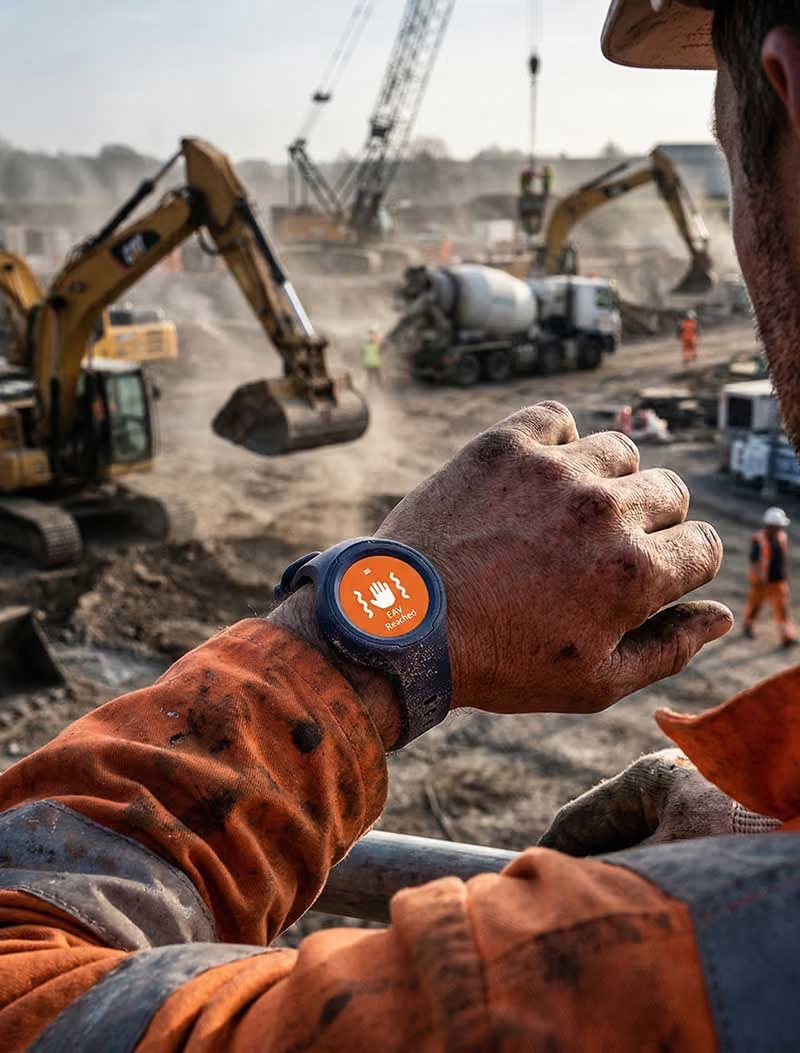
spacebands’ HAVS warning device tracks real-time vibration exposure and shows you when workers reach the exposure action value (EAV) or exposure limit value (ELV).
Protect your team from vibration over-exposure and stay compliant without spreadsheets, guesswork or manual logging.
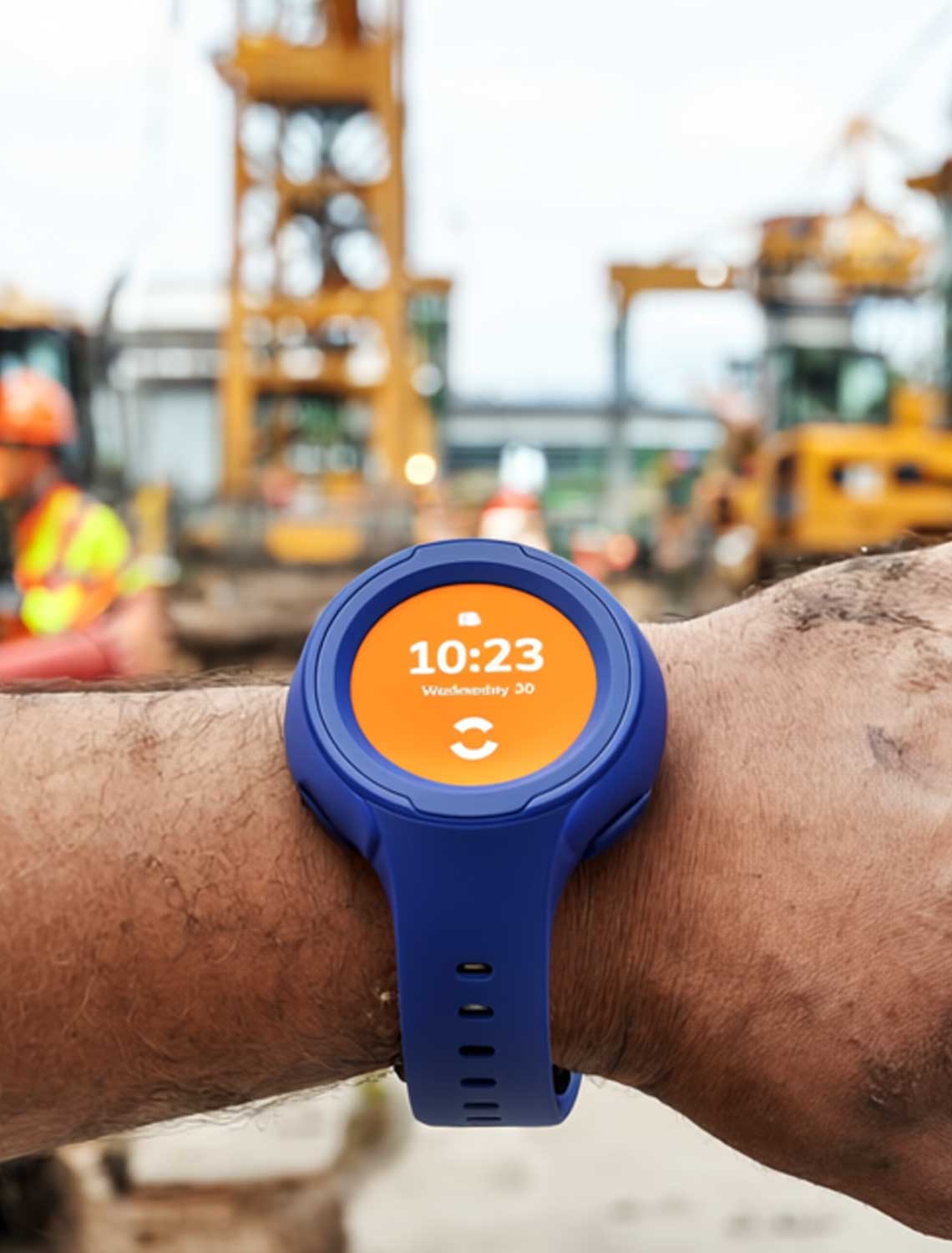
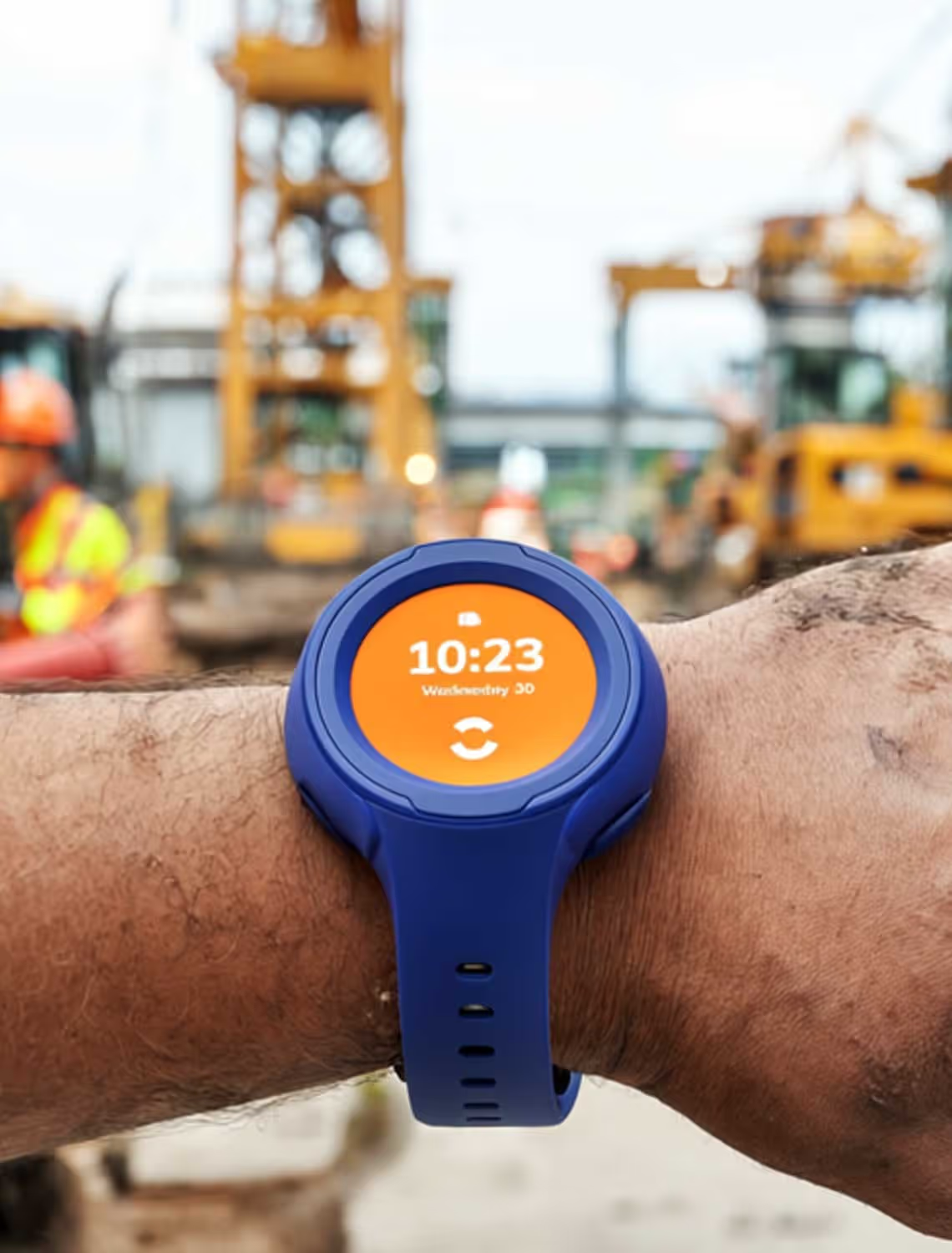
Each wearable uses a triaxial accelerometer to measure vibration while tools are being used, then calculates every worker’s daily A(8) exposure automatically and syncs it to the analytics dashboard.










MEASURING HAVS EXPOSURE
How spacebands monitor HAVS exposure
- The wearable measures vibration directly
A triaxial accelerometer records vibration exposure continuously while the tool is in use. - Daily exposure is calculated automatically
No manual maths. No calculator pages. No rounding errors. - Workers are alerted in real time
If their exposure is approaching the action limit, the device warns them instantly. They can stop, rotate tasks or change tools before harm occurs. - Everything syncs to the dashboard
Supervisors can see who is at risk, which tools and tasks are driving exposure, whether limits are being approached and how risk trends change over days and weeks.
PRODUCT BENEFITS
Get a simple overview of HAVS exposure
Manual HAVS logs are often estimates. Estimates get challenged. Claims and fines are rising.
spacebands gives you:
- Live HAVS exposure tracking for each worker
- Automated A(8) and points calculation
- Exposure warnings on the wearable
- Tool vibration magnitude suggestions with override
- Centralised compliance dashboard
- Downloadable logs for audits and reporting
- Configurable site and task setups
- Works indoors, outdoors and across multiple teams
Manual HAVS monitoring tells you what happened after the exposure has already occurred. spacebands moves you from reactive to preventative.

FROM ALERTS TO ACTION
Turn HAVS exposure alerts into preventative action
spacebands goes beyond passive exposure recording, helping workers and H&S teams act on risk as it develops.
- Warn workers in real time
On-device EAV and ELV warnings support immediate action. - Prompt management intervention
Exposure events create clear follow-up actions for the H&S team. - Record and improve
Add notes, document interventions and identify recurring exposure patterns.
Together, this creates a clear path from exposure warning to documented action, turning HAVS data into safer working practices.
ISO-aligned technology
Supporting modern HAVS monitoring standards
ISO/TS 22270 recognises the role of wearable systems in monitoring hand-transmitted vibration, including devices worn on the hand, wrist or arm.
spacebands is built around this worker-focused approach, helping employers understand how vibration exposure builds up across real tasks and shifts.
By converting exposure into daily A(8) values and warning workers in real time when EAV or ELV thresholds are reached, spacebands helps safety teams move from estimated exposure to more proactive personal HAVS risk management.

REQUIRED TECHNOLOGY
Hand arm vibration monitoring
To use the spacebands HAVS system you will need the devices below:


Customizable Settings:
spacebands wearables use a triaxial accelerometer to track vibration levels while tools are in use.
When a vibration threshold event occurs, the time, date, duration and severity of that event are recorded. The analytics dashboard then shows the accumulated exposure for each wearable over the day, including which threshold level each event occurred at. This gives you a clear record of how close workers are to the EAV and ELV limits.
Custom HAVS point thresholds can be set per wearable, allowing precise control over exposure limits across different roles, tools, or individuals.

Exposure Limit:
Configured to low, medium, high and severe thresholds

Alert Duration:
Length of time in seconds alert runs

Alert Type:
Vibrate/Light/Beep

Exposure Duration:
Length of time exposure permitted
the hand arm vibration problem
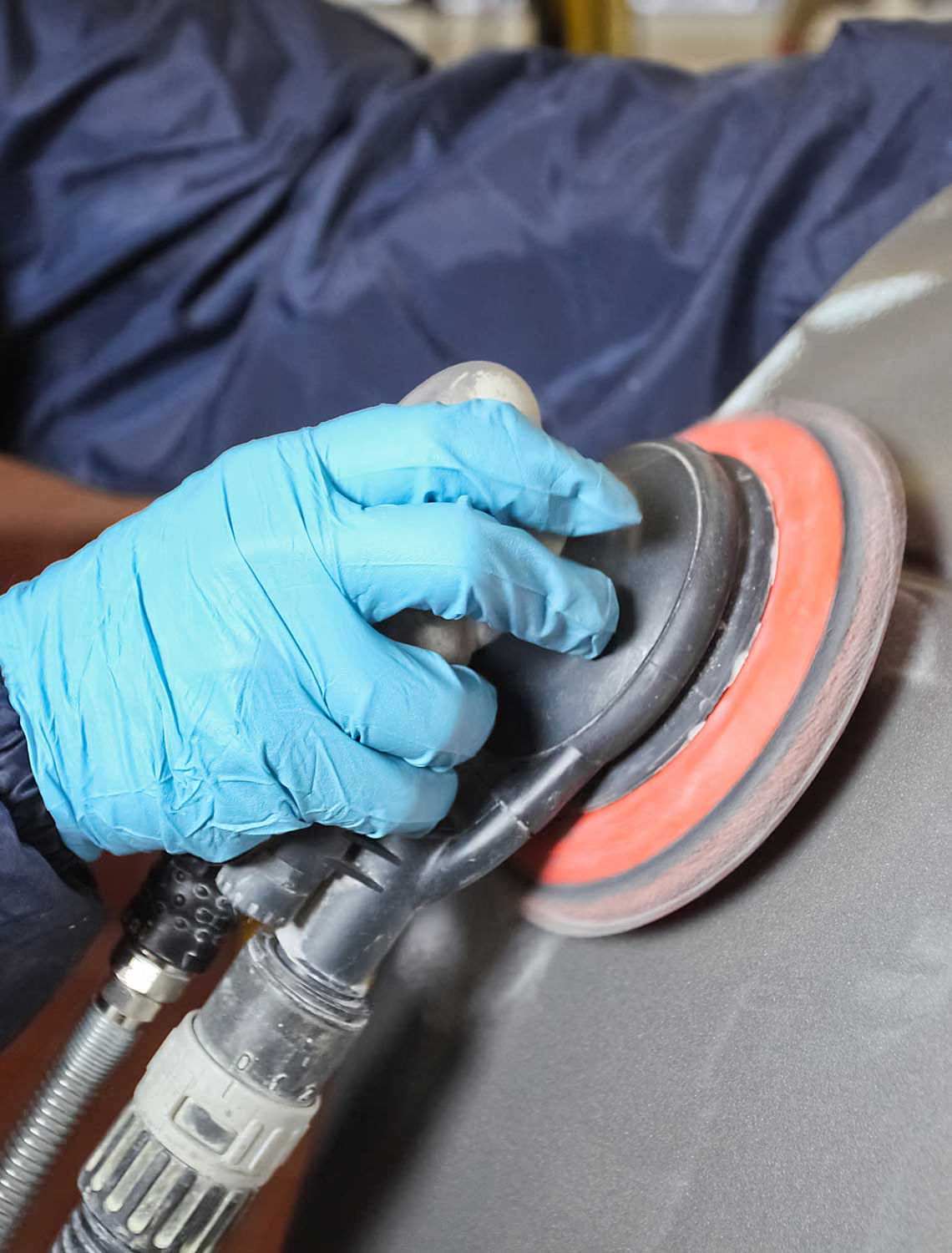
2 million workers in the UK are exposed to HAVS
Hand-arm vibration exposure is common, persistent and often underestimated.
- Up to 1 in 10 regular users of vibrating tools are expected to develop HAVS or vibration-related nerve damage during their working life.
- HAVS is permanent once established. There is no medical reversal.
The impact is not small:
- In 2023, over half of all new HAVS cases reported to HSE resulted in workers being unable to perform normal duties.
- Legal cases and compensation awards frequently exceed £100,000+ per affected worker, especially where exposure records are missing or incomplete.
- Most enforcement notices issued for HAVS come down to poor monitoring, not lack of awareness.
CUSTOMER FEEDBACK
Testimonials
Health and safety teams use spacebands to monitor exposure, reduce manual admin and give workers real-time alerts before risks escalate.

Nick S
Senior H&S Manager
spacebands have transformed the way we control exposure to vibration. In just a year of use we have reduced exposure by close to 80%. And our production has become far more engaged in proactive safety.
I’d recommend spacebands to any company that takes safety seriously.

Robert M
Health & Safety Manager
Since introducing spacebands, we’ve seen a huge improvement in how we manage hand–arm vibration exposure.
Our monitoring is now instant and accurate, and we’ve significantly reduced the risk of overexposure. The team is also more aware of safe working limits, which has boosted our overall safety culture.

Chris P
Plant Manager
We had previously used a different HAVS wearable, but they were sitting on a shelf gathering dust because our team didn't have the time for tool tagging.
With spacebands, they just have to be wearing the wearable and it records daily exposure.

David N
Site Manager
spacebands gave us the ability to measure various levels of exposure, various tools and various tasks without having to recalibrate or recalculate; or most importantly having a negative effect on our production.
We looked at a few other options but no others that we saw came with that level of flexibility.
CONTACT US
Start lowering your exposure with spacebands
Investing in spacebands is a great way to keep your workforce safe, whilst saving your company money.
Unchecked HAVS and noise exposure can lead to life-changing injuries, legal claims, HSE enforcement, fines and increased insurance costs. spacebands gives you the exposure data needed to spot risk early, protect workers and evidence compliance.
Get in touch to see how our wearables and analytics help you control hand arm vibration (HAVS), workplace noise, vehicle and machinery proximity, PPE compliance and unauthorised access risk.
FAQ
Frequently Asked Questions
spacebands are helping Health & Safety managers around the world reduce accidents, injuries and legal claims
Is staying beneath the exposure level (EAV/ELV) sufficient for compliance?
While staying below the EAV/ELV is a crucial step in ensuring worker safety, it doesn't guarantee complete compliance with occupational health and safety regulations.
Other factors that need to be considered include:
Risk assessment, PPE and emergency procedures.
spacebands HAVS feature is a great solution for monitoring exposure levels but alone it does not guarantee HSE compliance.
Do spacebands keep records for our insurance company?
All HAVS information is saved on each wearable device and uploaded to the analytics dashboard when the device is charged. Information is saved on the dashboard over time and you can look back at different date ranges and share this with your insurance company - if you would like to do so!
Why does my company need a HAV monitoring device?
A HAV monitoring device can help your company to protect the health and safety of workers who use vibrating tools and equipment, comply with health and safety regulations, prevent work-related injuries and illnesses, and reduce workers' compensation costs.
What is HAVS exposure measured in?
Exposure is measured in m/s² A(8), which represents the average vibration level over a standard eight-hour workday.
Can wearable HAVS monitoring support compliance?
Yes, wearable HAVS monitoring can support compliance by helping employers understand how vibration exposure builds up across real workers, tools, tasks and shifts.
Wearable technology is becoming an increasingly important part of hand-arm vibration risk management.
ISO/TS 22270 focuses on systems used to monitor or measure hand-transmitted vibration where devices are fitted to the hand, wrist or arm.
This is an important development because it recognises the role that wearable and on-person systems can play in helping organisations understand daily vibration exposure in real working environments.
For employers, this matters because HAVS risk is not always easy to manage through tool data, estimated trigger times or manual records alone. Workers may use multiple tools across a shift, tasks may overrun, and exposure can build up in ways that are difficult to see without consistent monitoring.
spacebands is designed around this modern, worker-focused approach.
Our wearable HAVS monitoring system helps convert exposure measurement into daily A(8) values, giving safety teams a clearer view of how worker exposure compares with the Exposure Action Value and Exposure Limit Value under the Control of Vibration at Work Regulations.
spacebands can also alert workers in real time when key exposure thresholds are reached, helping teams act during the working day rather than only reviewing exposure after the event.
The result is a more practical way to manage HAVS risk: better visibility, clearer records, earlier intervention and less reliance on assumptions.
Wearable monitoring provides a scalable way to monitor day-to-day exposure risk across the workforce and support a more proactive HAVS management programme.
Should workers be constantly monitored for HAVS when using machinery or equipment?
While regular monitoring for HAVS is important, it should be part of a comprehensive approach to preventing and managing the condition, including risk assessments, preventive measures, and regular health surveillance.
Does spacebands use triaxial vibration monitoring?
Yes. spacebands wearables use a triaxial accelerometer to measure vibration in three axes. This provides more reliable HAVS monitoring than single-axis sensing, especially when tools are used at different angles.
What is a HAV monitoring device?
A Hand-Arm Vibration monitoring device is a tool used to measure the level of vibration emitted by tools and equipment used by workers, which can help to identify the risk of Hand-Arm Vibration Syndrome (HAVS). HAV devices can help employers to identify the risk of HAVS and implement appropriate preventive measures.
How accurate is the spacebands HAV monitoring device?
spacebands measures hand-arm vibration exposure using a triaxial accelerometer, the same type of sensor commonly used in industrial monitoring, aerospace instrumentation, and medical-grade wearables.
A triaxial accelerometer captures vibration in three dimensions simultaneously (X, Y and Z axes), providing a more complete picture of how vibration travels through the hand and arm during tool use.
When a worker operates a tool, vibration waves travel through the device, through the grip, into the wrist and arm. The accelerometer inside the spaceband samples these vibration forces thousands of times per second, translating physical vibration into digital data points. The device then applies the internationally recognised HAV exposure calculation model to estimate:
• Daily exposure points
• A(8) exposure level
• Progression towards the EAV and ELV limits
This allows spacebands to provide real-time warnings when exposure risks are increasing - helping workers adjust behaviour before harm occurs, rather than discovering over-exposure hours later.
spacebands wearables do not require tool tagging, which makes them much easier for end users to adopt. Products that use tool tagging provide a big roadblock to end user adoption.
How do employers stay compliant with HAVS regulations?
They must assess exposure levels, keep records, act at the EAV, prevent work above the ELV, maintain tools and train workers to report symptoms early.







PRODUCT BENEFITS
Get a simple overview of HAVS exposure
Manual HAVS logs are often estimates. Estimates get challenged. Claims and fines are rising.
spacebands gives you:
- Live HAVS exposure tracking for each worker
- Automated A(8) and points calculation
- Exposure warnings on the wearable
- Tool vibration magnitude suggestions with override
- Centralised compliance dashboard
- Downloadable logs for audits and reporting
- Configurable site and task setups
- Works indoors, outdoors and across multiple teams
Manual HAVS monitoring tells you what happened after the exposure has already occurred. spacebands moves you from reactive to preventative.