



spacebands is a multi-sensor wearable that monitors external, environmental hazards, anticipates potential accidents, and gives real-time data on stress in hazardous environments.
Members of:



Recognition:




For ABL1 Touch, protecting technicians from hand-arm vibration was never about ticking a box. It was about having clear evidence that people were working safely, every day.
Before spacebands, the team could use averages to estimate risk, but they wanted something more accurate. They needed a way to capture real exposure data, identify potential issues quickly, and prove they were taking the right steps to protect their people.

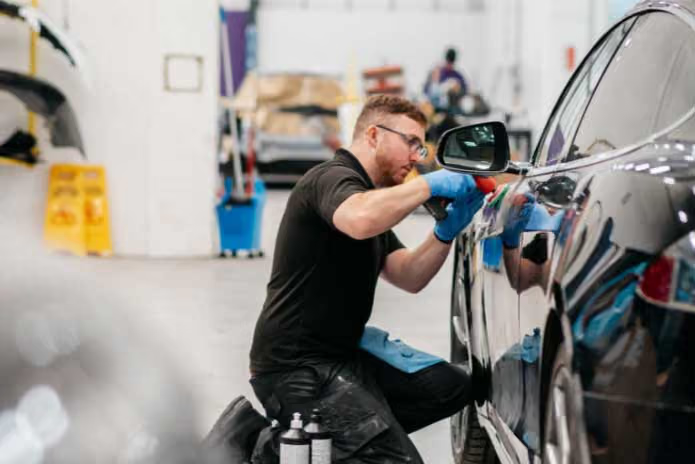
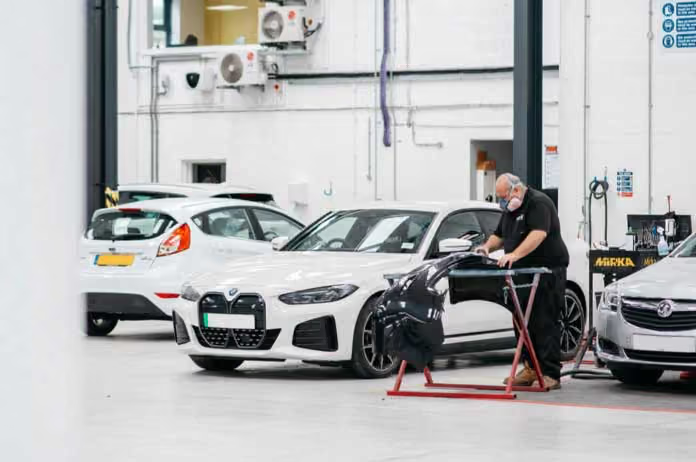
In accident repair, vibrating tools are part of the job. Technicians may use sanders, grinders, polishers and other handheld equipment throughout the day, often across varied tasks and working patterns.
For ABL1 Touch, the challenge was not a lack of care. It was a lack of real-world visibility.
They could use figures and average-based calculations to identify potentially unsafe tooling, but that did not show what was actually happening during day-to-day work. It did not reveal individual exposure levels. It did not highlight incorrect tool use. And it did not give the business the live evidence it wanted to confirm people were being protected properly.
As the team explained, they wanted “actual evidence of worker safety” so action could be taken as soon as possible if needed.
From the first impression, spacebands felt practical.
The system did not require a complicated rollout or another admin-heavy process for the team to manage. It gave ABL1 Touch a way to collect meaningful exposure data while people worked, without sending someone site to site to gather information later.
Setup was straightforward. Assigning the watches was simple, and the spacebands team were available to support the process when needed. That made adoption easier for both the business and the people wearing the devices.
A simple solution. It took the faff out of getting the information. Put on a watch and crack on.
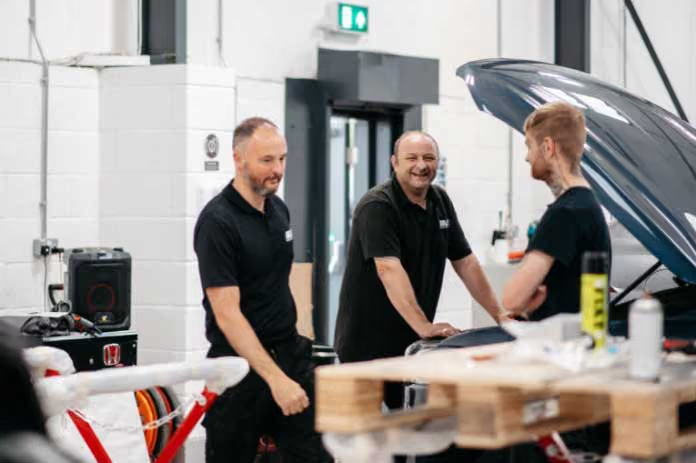
ABL1 Touch now has a more transparent way to understand exposure risk across the business.
Instead of relying only on estimated figures, the team can use spacebands to capture data from real working conditions. That gives them more confidence that their monitoring reflects what is actually happening, not just what should be happening on paper.
So far, the readings have not flagged issues, which is exactly the kind of reassurance good monitoring should provide. The value is not only in finding problems. It is also in being able to prove when working conditions are safe and under control.
For ABL1 Touch, the biggest benefit has been transparency.
The business can now share safety data across the company, giving teams greater confidence that vibration exposure is being monitored properly. It moves the conversation away from “we think this is safe” and towards “we can prove this is safe.”
That matters for compliance, but it also matters for culture.
When employees can see that the business is investing in better ways to protect them, it sends a clear message: their health is being taken seriously. As ABL1 Touch put it, spacebands shows the company is “taking further steps” and moving with the times, rather than relying on the attitude of “this has always worked previously.”
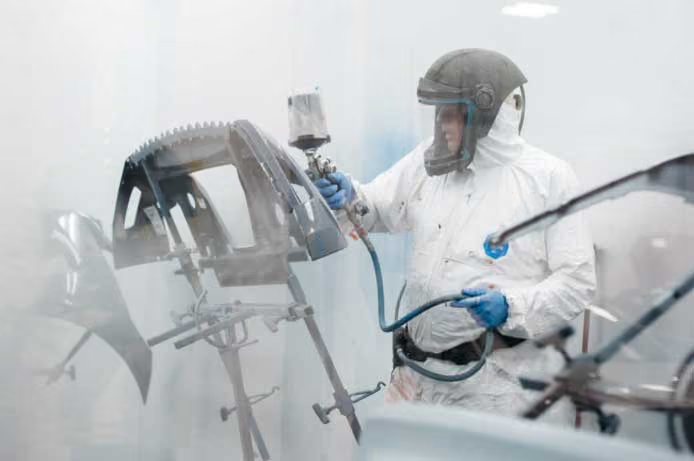
The strongest impact for ABL1 Touch has been the ability to prove safe working conditions and maintain them over time.spacebands gives the team:
As ABL1 Touch explained, they not only know they are providing a safe environment, they can prove it and maintain it.
Harry Kimberley-Bowen, Co-Founder of spacebands, said:
ABL1 Touch is a great example of a business that wanted to move beyond assumptions. They already cared about protecting their people, but they wanted better evidence, better visibility and a simpler way to manage exposure risk in real working conditions. That is exactly what spacebands is designed to provide.
Yes. For ABL1 Touch, the recommendation comes back to one simple point: protecting people’s health should be easy to justify.
Their advice to anyone unsure about adopting a solution like spacebands was direct: put yourself in the worker’s position and ask what reason there could be not to take further steps to protect their health.
They described spacebands as the easiest and most accurate way they had found to do that.
Put yourself in the workers’ position and then ask the question. What is a justifiable reason to not look after someone’s health?
ABL1 Touch did not choose spacebands to add another layer of reporting. They chose it because they wanted clearer evidence that their people were protected.
What they gained was:
This is what modern HAVS monitoring should look like: simple for workers, useful for managers, and focused on prevention before harm occurs.
