




spacebands is a multi-sensor wearable that monitors external, environmental hazards, anticipates potential accidents, and gives real-time data on stress in hazardous environments.
Members of:






Recognition:






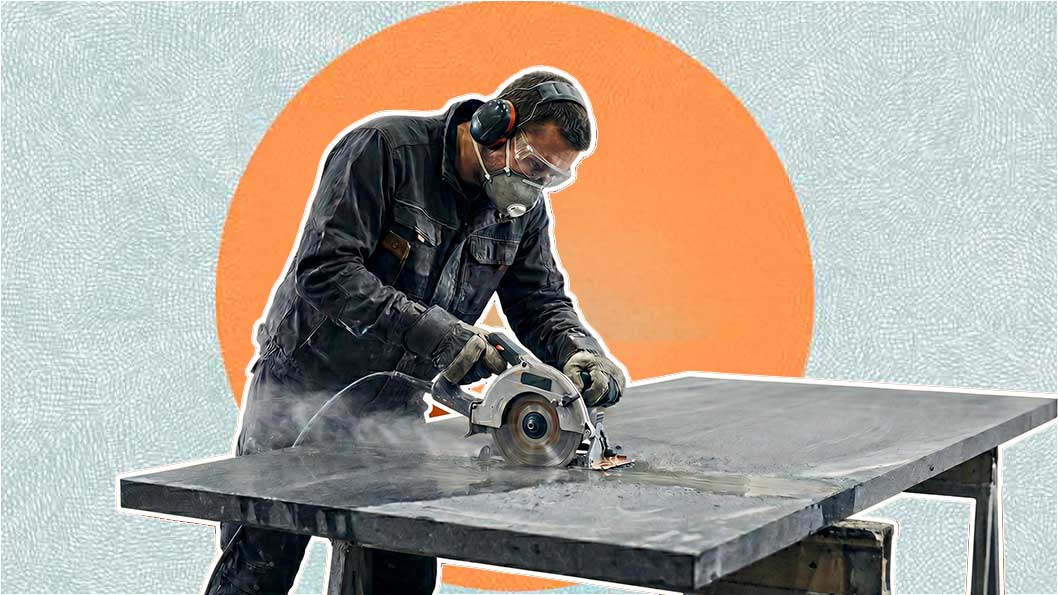
Workplace dust is often treated as a housekeeping issue, but under COSHH it is a health risk that employers are legally required to assess, control and monitor.
That risk has been pushed back into the spotlight after HSE published new guidance on engineered stone, making it clear that dry cutting is unacceptable and that businesses must use controls such as on-tool water suppression, suitable respiratory protective equipment and regular health surveillance. HSE has also confirmed a programme of more than 1,000 inspections across Great Britain to check whether businesses are managing the risk properly.
The reason for the focus is simple: dust can kill. Respirable crystalline silica, often released when cutting, grinding or drilling materials such as stone, concrete, bricks, tiles and engineered stone, can cause silicosis, chronic obstructive pulmonary disease and lung cancer. HSE states that silica is the biggest risk to construction workers after asbestos and has previously estimated that it was responsible for the deaths of over 500 construction workers in 2005.
Source: https://www.hse.gov.uk/construction/healthrisks/cancer-and-construction/silica-dust.htm
The danger is not always visible either. Fine respirable dust can be small enough to reach deep into the lungs, and HSE warns that damage may already be done before symptoms appear. In the case of silicosis, the disease can continue to worsen even after exposure has stopped.
Source: https://www.hse.gov.uk/stonemasonry/working-engineered-stone-control-silica-risk.htm
So, what does COSHH actually require when it comes to workplace dust? In simple terms, employers must identify hazardous substances, assess who could be exposed, put effective controls in place, maintain those controls, provide training and, where needed, carry out health surveillance.
This guide explains the key COSHH dust regulations, the types of dust employers need to manage, what the latest HSE engineered stone guidance means in practice, and the steps businesses can take to reduce exposure before it becomes a long-term health issue.
COSHH dust regulations require employers to assess and control worker exposure to hazardous dusts, including silica dust, wood dust, flour dust and other airborne substances that can damage health. Employers must prevent exposure where possible, use suitable control measures where exposure cannot be prevented, maintain those controls, train workers and provide health surveillance when required.
COSHH stands for the Control of Substances Hazardous to Health Regulations. It is the UK law that requires employers to protect workers from substances that could harm their health, including hazardous dusts, fumes, vapours, gases, liquids and biological agents.
For workplace dust, COSHH applies when dust is created by work activities and has the potential to damage health. This includes dust from cutting, sanding, drilling, grinding, polishing, sweeping or handling materials that release airborne particles.
Common workplace dusts covered by COSHH include:
COSHH does not just require employers to hand out masks and hope for the best. Employers must assess the risk, prevent exposure where possible, use suitable controls where exposure cannot be avoided, maintain those controls and make sure workers understand how to use them properly.
Source: https://www.hse.gov.uk/coshh/
Under COSHH, employers must take a structured approach to managing hazardous substances. For dust exposure, this usually means identifying where dust is produced, who could breathe it in, how often exposure happens and whether existing controls are effective.
In practical terms, employers should:
The important point is that COSHH is not a paperwork exercise. A risk assessment only helps if it leads to real controls on site, in the workshop or wherever the exposure is happening. A dusty folder in a dusty office does not count as dust control.
Workplace dust can be dangerous because the smallest particles are often the hardest to see and the easiest to breathe in. These fine particles can travel deep into the lungs, where they may cause long-term and sometimes irreversible damage.
Some dusts cause immediate irritation, coughing or breathing difficulties. Others can cause serious diseases that develop slowly over many years. This means workers may not realise they have been harmed until long after the exposure first happened.
Hazardous dust exposure has been linked to conditions including:
One of the biggest concerns is respirable crystalline silica, also known as RCS. This dust is created when materials such as stone, concrete, bricks, tiles, mortar and engineered stone are cut, drilled, ground or polished.
HSE describes silica as the biggest risk to construction workers after asbestos and has previously estimated that it was responsible for the deaths of more than 500 construction workers in 2005.
Source: https://www.hse.gov.uk/construction/healthrisks/cancer-and-construction/silica-dust.htm
Respirable crystalline silica is a very fine dust released when silica-containing materials are disturbed. Because the particles are so small, they can be breathed deep into the lungs.
In simple terms, respirable crystalline silica is dangerous because it can scar lung tissue and make it harder for workers to breathe. Long-term or high-level exposure can lead to silicosis, COPD and lung cancer.
Materials that can contain crystalline silica include:
The risk increases when these materials are cut, ground, drilled, polished or broken up without effective dust controls. Dry cutting is especially high risk because it can release large amounts of airborne dust directly into the worker’s breathing zone.
In Great Britain, the workplace exposure limit for respirable crystalline silica is 0.1 mg/m³, averaged over an 8-hour time-weighted average reference period.
That figure is tiny. To put it bluntly, if you can clearly see airborne dust during silica-related work, you may already have a serious control problem.
Source: https://www.hse.gov.uk/pubns/books/eh40.htm
HSE’s latest engineered stone guidance has brought silica exposure back into sharp focus. The guidance makes it clear that dry cutting engineered stone is unacceptable because of the amount of respirable crystalline silica dust it can release.
Engineered stone is commonly used for kitchen and bathroom worktops. It is often made from crushed stone bound together with resin, pigments and other materials. Some products can contain high levels of crystalline silica, which means cutting, grinding or polishing them can create a serious inhalation risk if the work is not properly controlled.
HSE has said that businesses working with engineered stone must use effective control measures, including on-tool water suppression. Water suppression helps reduce the amount of airborne dust created during cutting, but it must still be properly managed because contaminated mist, slurry and wet waste can also create health risks if handled badly.
Source: https://www.hse.gov.uk/stonemasonry/working-engineered-stone-control-silica-risk.htm
HSE has not introduced a completely new law or a formal standalone ban on dry cutting engineered stone. However, its position is clear: dry cutting is not considered an acceptable way to control silica exposure.
In practice, this means employers should not be dry cutting engineered stone unless they can prove they are using an alternative control method that is at least as effective as water suppression. For most businesses, that will be difficult to justify.
HSE has also announced that inspectors will carry out more than 1,000 inspections across Great Britain to check whether businesses are controlling engineered stone risks properly. Where employers are not meeting their duties, enforcement action may follow.
For engineered stone work, HSE expects employers to reduce exposure at source and use layered controls. Relying on masks alone is not enough.
Practical controls include:
The key point is that dust control needs to be built into the task, not added at the end. Once silica dust is airborne, the risk is already in the worker’s breathing zone. That is where employers can quickly move from “we have a process” to “we have a problem”.
COSHH can apply to many different types of workplace dust. The level of risk depends on the material, the task, the amount of dust created, how often workers are exposed and whether effective controls are in place.
Some dusts are mainly irritants. Others can cause serious long-term illness, including occupational asthma, lung disease and cancer. Employers should not assume that dust is low risk just because it is common.
Silica dust is one of the most serious workplace dust risks. It is created when silica-containing materials are cut, drilled, ground, polished or broken up.
High-risk materials include:
The most dangerous form is respirable crystalline silica, which is fine enough to reach deep into the lungs. Exposure can cause silicosis, chronic obstructive pulmonary disease and lung cancer.
Silica dust is a major issue in construction, stonemasonry, tunnelling, demolition, quarrying, manufacturing and any work involving engineered stone.
Source: https://www.hse.gov.uk/construction/healthrisks/cancer-and-construction/silica-dust.htm
Wood dust is produced when timber or wood-based materials are cut, sanded, machined or processed. Both hardwood and softwood dust can be harmful.
Wood dust can cause occupational asthma and other breathing problems. Hardwood dust is also associated with a risk of nasal cancer, which means employers need to take exposure seriously in joinery, carpentry, furniture manufacturing, sawmills and construction.
Common sources of wood dust include:
Controls usually include local exhaust ventilation, suitable extraction on tools, good housekeeping, respiratory protective equipment where needed and regular maintenance of extraction systems.
Source: https://www.hse.gov.uk/woodworking/wooddust.htm
Construction dust is not one single substance. It is usually a mixture of different dusts created by cutting, drilling, demolition, grinding, sweeping and moving materials around site.
Construction dust may include:
The danger is that workers may be exposed repeatedly across different tasks throughout the day. Even short jobs can add up when workers move between cutting, drilling, sweeping, breaking out and cleaning.
This is why COSHH controls should look at the full working pattern, not just one isolated task.
Flour dust is a common risk in bakeries, food production and catering environments. It can cause occupational asthma and respiratory irritation, especially where flour is tipped, sieved, mixed, weighed or cleaned up dry.
High-risk activities include:
Employers should reduce airborne flour dust through better handling methods, enclosed processes where possible, extraction, low-dust cleaning methods and worker training.
Source: https://www.hse.gov.uk/food/flour-dust.htm
Metal dust and welding fume can be created during grinding, cutting, sanding, welding and fabrication work. The risk depends on the metal, coating, process and ventilation.
Welding fume is especially important because HSE strengthened its enforcement expectations after evidence showed that exposure to mild steel welding fume can cause lung cancer.
Employers should use suitable engineering controls, such as local exhaust ventilation, and provide suitable respiratory protective equipment where exposure cannot be adequately controlled by extraction alone.
Source: https://www.hse.gov.uk/welding/index.htm
COSHH covers workplace dusts that can harm health, including silica dust, wood dust, flour dust, metal dust, welding fume and construction dust. Employers must assess the risk, prevent or control exposure, maintain control measures, train workers and provide health surveillance where required.
Under COSHH, employers must prevent exposure to hazardous dust where reasonably practicable. Where exposure cannot be prevented, it must be adequately controlled.
The best approach is to control dust at source, before it becomes airborne and reaches the worker’s breathing zone. PPE and RPE still have a role, but they should not be the first or only line of defence.
A practical dust control plan should follow the hierarchy of control:
Where possible, remove the task or material that creates the dust. This could mean using pre-cut materials, off-site fabrication, alternative products or different installation methods.
For engineered stone, HSE specifically advises using products with lower silica content where possible.
Source: https://www.hse.gov.uk/stonemasonry/working-engineered-stone-control-silica-risk.htm
If the task cannot be eliminated, reduce the amount of dust created. This may include:
This is where a lot of businesses fall down. If dust is already floating around the work area, you are managing the consequence rather than controlling the cause.
Engineering controls are physical systems that reduce exposure. Examples include:
These controls need to be properly selected, used, maintained and tested. A broken extraction unit quietly becoming workplace furniture is not a control measure.
Employers should make sure dusty tasks are planned and carried out in a controlled way. This includes limiting the number of workers exposed, reducing time spent on dusty tasks and making sure high-risk work does not contaminate nearby areas.
Safe systems of work may include:
Respiratory protective equipment may still be needed, especially for higher-risk dusts such as respirable crystalline silica, wood dust or flour dust.
However, RPE must be suitable for the task, the wearer and the level of exposure. It also needs to be face-fit tested where tight-fitting masks are used.
For engineered stone work, HSE says suitable RPE may include powered air purifying respirators with an assigned protection factor of at least 20.
Source: https://www.hse.gov.uk/stonemasonry/working-engineered-stone-control-silica-risk.htm
Masks can reduce inhalation risk, but they do not remove the hazard. They also depend on correct selection, fit, use, storage and maintenance.
A mask may fail if:
Under COSHH, relying only on RPE is usually weaker than controlling exposure at source. The aim should be to stop dust being created or released in the first place, then use RPE as an additional layer where needed.
Employers should control workplace dust by preventing exposure where possible and using effective controls where exposure cannot be avoided. This includes eliminating dusty tasks, using water suppression or extraction, maintaining control equipment, restricting access, training workers, using safe cleaning methods and providing suitable respiratory protective equipment where required.
Workplace dust monitoring may be needed when employers cannot clearly show that exposure is being adequately controlled. Under COSHH, employers must understand the level of risk workers face and be able to prove that control measures are effective.
Dust monitoring can help employers answer important questions, such as:
Monitoring is especially important where workers are exposed to higher-risk dusts, including respirable crystalline silica, wood dust, flour dust, metal dust or welding fume.
HSE states that exposure monitoring is required where there could be serious health effects if controls fail or deteriorate, where exposure limits may be exceeded, or where the employer needs to check whether controls are working properly.
Source: https://www.hse.gov.uk/coshh/basics/exposurelimits.htm
For dust, that means monitoring may be needed when:
The important word here is evidence. If an inspector asks how you know exposure is controlled, “we’ve always done it this way” is not going to land brilliantly.
Workplace exposure limits, or WELs, are legal limits for the concentration of hazardous substances in workplace air. They are listed in HSE’s EH40 publication and usually measured over a set reference period, such as an 8-hour time-weighted average.
For example, the workplace exposure limit for respirable crystalline silica is 0.1 mg/m³, averaged over an 8-hour reference period.
Source: https://www.hse.gov.uk/pubns/books/eh40.htm
A workplace exposure limit should not be treated as a target. Employers should reduce exposure as far as reasonably practicable, not simply aim to sit just below the legal limit.
Dust monitoring usually involves taking air samples from the worker’s breathing zone while they carry out normal tasks. The sample is then analysed to estimate the level of exposure.
Depending on the substance, monitoring may look at:
The results can then be compared against workplace exposure limits and used to decide whether current controls are effective.
Dust monitoring is useful, but it is not a control measure by itself. It tells you what is happening. It does not fix the issue.
If monitoring shows exposure is too high, employers may need to improve controls by:
In other words, monitoring should lead to action. Otherwise, it is just expensive confirmation that the air is spicy.
Employers may need workplace dust monitoring when they cannot clearly prove that exposure is adequately controlled, when workplace exposure limits could be exceeded, or when hazardous dusts could cause serious health effects. Dust monitoring helps employers check exposure levels, confirm whether controls are working and decide whether further action is needed under COSHH.
Health surveillance may be required when workers are exposed to hazardous dusts that can cause serious disease, especially where there is a risk of occupational asthma, silicosis, COPD, cancer or other long-term respiratory conditions.
Under COSHH, health surveillance is needed when:
For dust exposure, health surveillance can help identify early warning signs before a condition becomes more serious. This is especially important because diseases such as silicosis and occupational asthma can develop gradually, and workers may not notice symptoms straight away.
Source: https://www.hse.gov.uk/health-surveillance/
Health surveillance may be needed where workers are regularly exposed to:
It may also be needed where exposure is frequent, control measures rely heavily on correct worker behaviour, or there is uncertainty about whether exposure is being adequately controlled.
For engineered stone work, HSE specifically says that businesses should provide health surveillance for workers who are regularly exposed to respirable crystalline silica.
Source: https://www.hse.gov.uk/stonemasonry/working-engineered-stone-control-silica-risk.htm
Health surveillance depends on the substance, task and level of risk. For workplace dust, it may include:
Health surveillance should be carried out by a competent person or occupational health provider. Employers should also keep appropriate records and act on any findings.
Training is a key part of COSHH compliance. Workers need to understand the risks from dust and how to use controls properly.
Training should explain:
Training should be practical, not just a tick-box slideshow. Workers need to know what good control looks like during real tasks, especially when production pressure, deadlines or “just this once” decisions start creeping in.
Health surveillance records help employers demonstrate that risks are being managed and that workers are being monitored appropriately over time.
These records can also help identify patterns, such as repeated symptoms in certain roles, areas or tasks. If several workers report similar breathing issues, that is a signal to review the risk assessment and control measures.
Good records do not replace good controls, but they do help show that the business is taking exposure seriously.
Health surveillance may be needed when workers are exposed to hazardous dusts that can cause occupational asthma, silicosis, COPD, cancer or other long-term health conditions. Under COSHH, employers should provide health surveillance where there is a known health risk, a reasonable chance of harm and a valid way to detect early signs of disease.
A COSHH dust risk assessment should identify where hazardous dust is created, who could be exposed, how exposure happens and what controls are needed to reduce the risk.
For employers, the aim is not just to complete a document. The aim is to create a practical plan that workers can follow and supervisors can check.
Start by listing the materials, tasks and processes that create dust.
This may include:
Employers should check safety data sheets, manufacturer instructions, HSE guidance and existing risk assessments to understand what substances may be present.
Dust exposure is not always limited to the person doing the task. Nearby workers, cleaners, maintenance staff, visitors and subcontractors may also be exposed if dust spreads through the workplace.
Consider:
This is especially important in shared workplaces, workshops and construction sites where different teams may be exposed to dust created by someone else’s work.
Employers should look at how dust gets into the air and how workers may inhale it.
Ask:
Visible dust is a warning sign, but the most dangerous particles are often too small to see. That is why employers should not rely on eyesight alone when assessing risk.
The next step is to check what controls are already in place and whether they are actually working.
Review:
A control measure is only useful if it is used correctly, maintained properly and suitable for the level of risk. An extraction system that exists but is not switched on is just expensive decoration.
If the current controls are not enough, employers must take further action to reduce exposure.
This could include:
The highest priority should be tasks involving dusts known to cause serious disease, such as respirable crystalline silica, wood dust and welding fume.
COSHH assessments should clearly record the dust hazards, who may be exposed, the control measures required and who is responsible for making sure they happen.
A good assessment should be clear enough that a supervisor or worker can understand what needs to be done before the job starts.
Include:
COSHH dust risk assessments should be reviewed when something changes or when there is reason to believe the assessment is no longer valid.
Review the assessment if:
The new HSE guidance on engineered stone is a good example of why assessments should not be treated as “done forever”. When enforcement expectations change, businesses need to check whether their controls still meet the required standard.
Source: https://www.hse.gov.uk/coshh/basics/assessment.htm
A COSHH dust risk assessment should identify the hazardous dust created by work activities, who may be exposed, how exposure happens, what controls are already in place and what further action is needed. It should also cover training, respiratory protective equipment, health surveillance, maintenance, exposure monitoring where required and regular review.
Many dust exposure problems happen because controls exist on paper but fail in practice. COSHH compliance depends on what actually happens during the task, not just what the risk assessment says should happen.
Respiratory protective equipment can be important, but it should not be the only control. Employers should first look at whether dust can be eliminated, reduced, suppressed or extracted before it reaches the worker’s breathing zone.
Masks also rely on correct selection, fit, use and maintenance. If any of those fail, exposure can quickly increase.
Dry cutting, grinding or polishing can create large amounts of airborne dust. It may feel faster in the moment, but it can create serious long-term health risks and increase the likelihood of enforcement action.
HSE’s engineered stone guidance is a clear warning here: dry cutting engineered stone is unacceptable unless an employer can prove an alternative method gives equal or better protection.
Dust does not stop being a risk when the task ends. Settled dust can be disturbed later by sweeping, movement, compressed air, vehicles or other work activities.
High-risk cleaning mistakes include:
Employers should use safe cleaning methods, such as wet cleaning or suitable industrial vacuum systems fitted with appropriate filtration.
Extraction and water suppression systems can lose effectiveness over time. Filters block, hoses split, airflow drops, water feeds fail and workers may adapt the setup to make the job easier.
Controls should be checked, maintained and tested so employers know they are still working properly.
For local exhaust ventilation, HSE says systems should be thoroughly examined and tested at least every 14 months.
Source: https://www.hse.gov.uk/lev/thorough-examination-and-test.htm
Outdoor work can reduce dust build-up compared with enclosed spaces, but it does not remove the risk. Workers can still breathe in high levels of dust when they are close to the source, especially during cutting, drilling, grinding or demolition.
The key question is not “is it outside?” The better question is “what is the worker breathing in while the task is happening?”
Dust controls only work when workers understand the risk and know how to use them. If workers do not know why dry cutting is dangerous, why extraction matters or how to check RPE, controls can be ignored or used incorrectly.
Training should be task-specific and practical. A generic COSHH presentation is unlikely to be enough for high-risk work involving silica, wood dust or engineered stone.
Dust risk can change when a business introduces new materials, tools, processes, work areas or suppliers. For example, switching to a different stone, tile, board or composite material may change the level of silica or other hazardous substances present.
COSHH assessments should be reviewed when work changes, when HSE guidance changes or when monitoring suggests exposure may not be adequately controlled.
Common COSHH dust control mistakes include relying only on masks, using dry cutting, failing to maintain extraction systems, dry sweeping settled dust, using compressed air for cleaning, assuming outdoor work is safe, not training workers properly and failing to review risk assessments when materials, tools or guidance change.
A good COSHH dust management plan should turn the risk assessment into clear actions that workers, supervisors and managers can follow. It should explain what the dust risks are, how exposure will be controlled and how the business will check that controls are working.
This is especially important for dust because exposure can happen across lots of small tasks. A few minutes of cutting, drilling, sweeping or sanding may not seem significant on its own, but repeated exposure across a shift, week or career can create serious long-term health risks.
Start by identifying the tasks, tools and work areas that create dust.
This may include:
The aim is to build a clear picture of where exposure could happen, rather than only focusing on the most obvious high-dust tasks.
Not all dusts carry the same level of risk. Employers should prioritise dusts that are known to cause serious disease, have strict exposure limits or are created frequently.
High-priority dust risks include:
Respirable crystalline silica should be treated as a particular priority because of its link to silicosis, COPD and lung cancer.
Dust controls should be planned before the task begins, not improvised once the area is already covered in dust.
Before work starts, decide:
This makes dust control part of the job setup, rather than a rushed add-on when someone notices the air has turned beige.
Controls are more likely to be used when they are practical, available and built into the normal way of working.
For example:
If controls are awkward, missing or slow workers down too much, people may find workarounds. And “creative workaround” is rarely a phrase you want near COSHH compliance.
A dust management plan should include regular checks to make sure controls are actually being used.
Supervisors should check:
These checks do not need to be complicated, but they do need to happen. The gap between “we have a system” and “the system is being used” is where a lot of exposure risk lives.
Records help employers prove that dust risks are being managed and that controls are being reviewed.
Useful records include:
Good records are not about paperwork for paperwork’s sake. They help show what was done, when it was done and whether the business acted when risk changed.
Dust management should be reviewed regularly, especially when work changes.
Review your plan when:
The latest HSE engineered stone guidance is a good reminder that compliance is not static. Employers need to keep checking whether yesterday’s controls still meet today’s expectations.
To manage dust under COSHH, employers should identify where hazardous dust is created, assess who may be exposed, prioritise high-risk dusts, choose suitable controls before work starts, train workers, check controls are being used correctly, keep records and review the plan when tasks, materials or guidance change.
The new HSE guidance on engineered stone is a clear reminder that workplace dust is not a minor housekeeping issue. It is a serious health risk, and employers are expected to control it properly.
For businesses working with engineered stone, the message is direct: dry cutting is unacceptable, water suppression should be used, RPE must be suitable and workers need proper health surveillance.
For other employers, the wider lesson is just as important. COSHH requires businesses to understand what workers are exposed to, reduce that exposure where possible and prove that controls are working.
That means employers should not rely on assumptions such as:
Dust exposure often builds up through repeated tasks, poor cleaning methods, failed controls or small shortcuts that become normal practice. Over time, those exposures can lead to serious and life-changing health conditions.
A good COSHH dust management plan should be practical, task-specific and regularly reviewed. It should help workers understand the risks, make controls easy to use and give managers clear evidence that exposure is being controlled.
The direction from HSE is clear: businesses need to move away from estimating and assuming, and towards controlling, monitoring and evidencing exposure.
For employers, the question is not just whether a COSHH assessment exists. The real question is whether it reflects what is happening on site, in the workshop or at the point of exposure.
Under COSHH, employers must prevent or adequately control worker exposure to hazardous dust. This means identifying dust hazards, assessing who may be exposed, using effective controls, maintaining those controls, training workers, monitoring exposure where needed and providing health surveillance where there is a risk of disease.
Watch the online demo and see how wearable safety technology helps teams monitor exposure, reduce admin and prove risk is being managed.


We think you'll also find the articles below really useful
Join 5,000 H&S professionals and sign up for the spacebands monthly newsletter and get the latest blogs, free resources, tools, widgets and a dose of health & safety humour.
spacebands is a multi-sensor wearable that monitors external, environmental hazards, anticipates potential accidents, and gives real-time data on stress in hazardous environments.
