

spacebands is a multi-sensor wearable that monitors external, environmental hazards, anticipates potential accidents, and gives real-time data on stress in hazardous environments.
Members of:





Recognition:







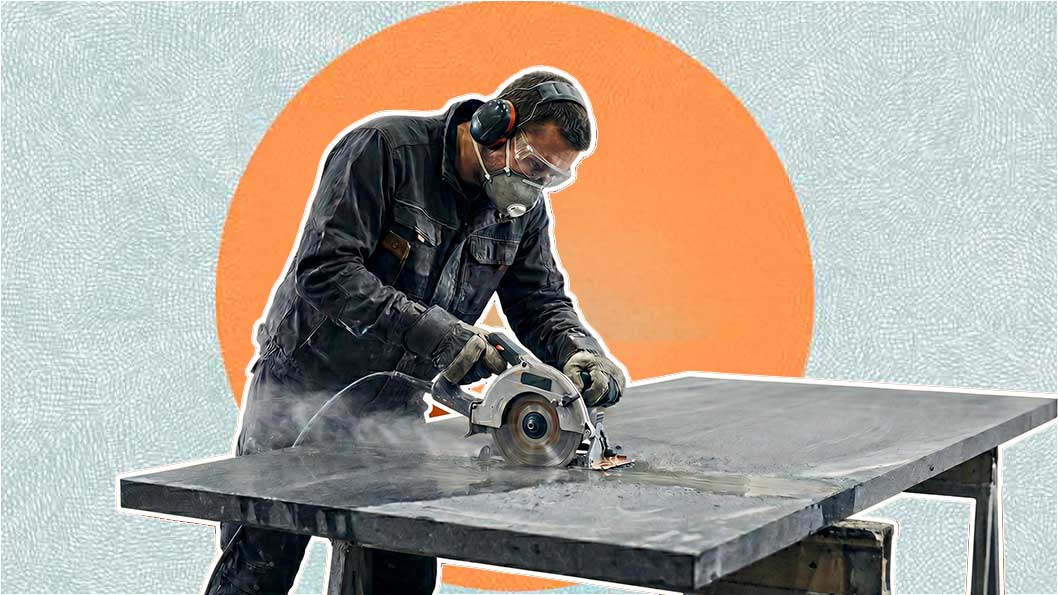
A worktop can pass through several stages before it is ready to leave the workshop. Where handheld tools are involved, a fabricator might grind an edge, polish a profile and make adjustments around a cut-out, moving between jobs as production demands change.
Each task contributes to that person’s daily vibration exposure. For the manager responsible for health and safety, the challenge is understanding the combined exposure and using that information to plan safer work.
This guide explains where hand-arm vibration risks arise in worktop fabrication, how to manage them and where spacebands can support your existing approach.
Handheld grinders, polishers and cutting tools deserve attention wherever they form part of routine fabrication or installation. The relevant question is how workers use them: the equipment, accessory, material, condition and duration of use all affect the assessment.
HSE warns that stoneworkers using rotary tools for cutting or polishing may reach the daily exposure action value well within an hour. That is a reason to investigate your processes, rather than assume every polisher has the same vibration level or permitted usage time.
Start by walking through the workshop with the people doing the work. Identify which finishing stages involve handheld equipment, who carries them out and whether the same person regularly takes on additional adjustments before dispatch or during installation.
Imagine a worker spending part of the morning grinding edges, returning to polishing after lunch and then completing several small corrections. Looking at each job separately can obscure the total exposure accumulated by that worker.
Changing tools does not reset the daily total. Equally, spending two hours on a finishing job does not necessarily mean two hours of vibration exposure: measuring, inspecting and repositioning the workpiece may account for part of that time.
HSE advises employers to establish the time workers are actually exposed to vibration and account for each tool or process used. It also cautions that manufacturers’ figures must represent the way equipment is used in practice.
A useful assessment therefore needs both suitable vibration information and a realistic understanding of the working day. Ask whether the assumptions still hold during a busy week, a different product mix or a change in staffing.
In Great Britain, the daily hand-arm vibration exposure action value is 2.5 m/s² A(8), equivalent to 100 exposure points. The exposure limit value is 5 m/s² A(8), equivalent to 400 points. A(8) expresses daily exposure normalised to an eight-hour reference period.
The action value triggers a programme of measures to reduce exposure. The limit value must not be exceeded. Neither should be treated as a production target or a guarantee that exposure below it is harmless. Employers must assess and reduce the risks, provide information and training, and arrange health surveillance where required. HSE employers’ responsibilities
For workshop managers, the practical question is what happens before a worker approaches a problematic level. Agree the response in advance, including who makes decisions about further tool use and how alternative work will be arranged.
Begin with opportunities to reduce the amount of powered hand finishing required. Could an earlier machining stage improve consistency or reduce rework? Could a suitable fixture make the task easier to complete? Discuss changes with operators and equipment suppliers before introducing them.
HSE recommends suitable lower-vibration tools, proper maintenance and working methods that reduce the grip or force required. Automation can also remove some sources of exposure.
Build these considerations into purchasing and production planning. A tool should be assessed for the job it will actually perform, including how efficiently it completes the task. Keep accessories in suitable condition and make it easy for workers to report changes in tool behaviour.
When allocating jobs, consider each person’s accumulated exposure. Moving someone from grinding to another vibrating tool may offer little benefit. Where work is reassigned, check that the change also protects the colleague taking it on.
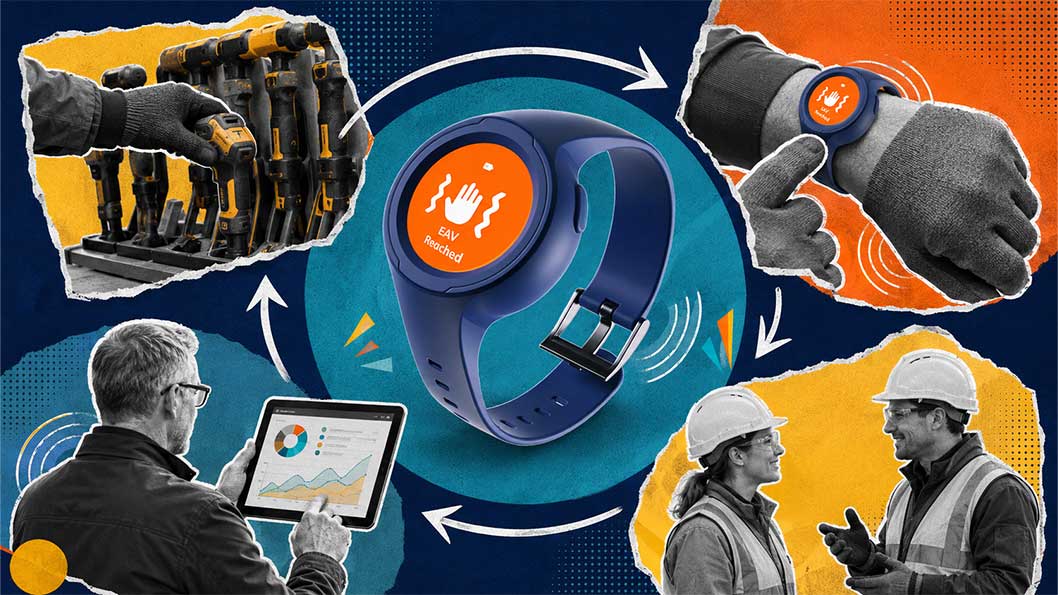
spacebands combines wrist-worn vibration and noise monitoring with a dashboard for reviewing worker and team information. Its current offering gives fabricators a way to add ongoing monitoring and reporting to their risk management process without tagging individual tools.
During the working day, the wearable alerts the worker when its recorded exposure reaches an action or limit threshold. Workers need a clear procedure for responding to those alerts. An alert at the limit is a prompt for immediate action, rather than permission to finish the current job.
Data uploads when the device is placed on charge. Managers can then review exposure records, identify recurring patterns and record follow-up actions in the dashboard. This upload process should be understood when planning supervision: managers are reviewing uploaded information rather than watching a live feed from every device.
For example, repeated higher readings on a particular worker’s finishing days could prompt a conversation about their task allocation, tool condition or additional rework. The record helps direct the investigation; the manager and worker establish what happened and what needs to change.
Vibration management should sit alongside the workshop’s approach to noise. A worker’s noise exposure can include nearby machinery as well as the tool they are operating.
spacebands’ noise monitoring provides another source of information for reviewing workers’ days. Use it alongside your noise risk assessment and the controls appropriate to the workplace.
HSE recommends reducing noise at source, using quieter equipment and considering measures such as enclosures or barriers. Hearing protection supports those controls where needed.
Make exposure review a routine management task with a named owner. Discuss unusual results with the worker, record what was checked and assign any follow-up action. Then review whether the change helped.
For worktop fabricators, useful monitoring should lead to decisions: a maintenance check, a revised finishing process, better task allocation or a review of the underlying assessment. Those decisions are what make the information valuable.
To see how wrist-worn vibration and noise monitoring could fit into your fabrication workflow, book a spacebands demonstration and talk us through your team’s working day.
Regular use of vibrating handheld tools, including grinders and polishers, can put worktop fabricators at risk of hand-arm vibration syndrome (HAVS). The risk depends on vibration levels and exposure duration across the working day. HSE identifies stone cutting and polishing as activities requiring careful vibration management. HSE guidance
In Great Britain, the daily exposure action value is 2.5 m/s² A(8), equivalent to 100 exposure points. The exposure limit value is 5 m/s² A(8), equivalent to 400 points. Employers must introduce controls at the action value and prevent exposure exceeding the limit. These values are not targets or guarantees of safe exposure. HSE responsibilities
No. Exposure from different vibrating tools contributes to the worker’s combined daily total. Switching from a grinder to a polisher does not reset it. Task changes should be planned using suitable vibration data and realistic exposure times for each activity. HSE risk assessment guidance
spacebands provides wrist-worn vibration monitoring, worker threshold alerts and dashboard reporting without individual tool tagging. Managers can review uploaded records, investigate recurring patterns and record follow-up actions. Monitoring supports risk management alongside suitable tools, maintenance, training and exposure controls; it does not replace a competent risk assessment.
Exposure data uploads when the wearable is placed on charge. Managers can then review worker and team information in the dashboard. Alerts are delivered to the worker during use when recorded exposure reaches an action or limit threshold, so workers need a clear procedure for responding.
Watch the online demo and see how wearable safety technology helps teams monitor exposure, reduce admin and prove risk is being managed.


We think you'll also find the articles below really useful
Join 5,000 H&S professionals and sign up for the spacebands monthly newsletter and get the latest blogs, free resources, tools, widgets and a dose of health & safety humour.
spacebands is a multi-sensor wearable that monitors external, environmental hazards, anticipates potential accidents, and gives real-time data on stress in hazardous environments.
