




spacebands is a multi-sensor wearable that monitors external, environmental hazards, anticipates potential accidents, and gives real-time data on stress in hazardous environments.
Members of:




Recognition:






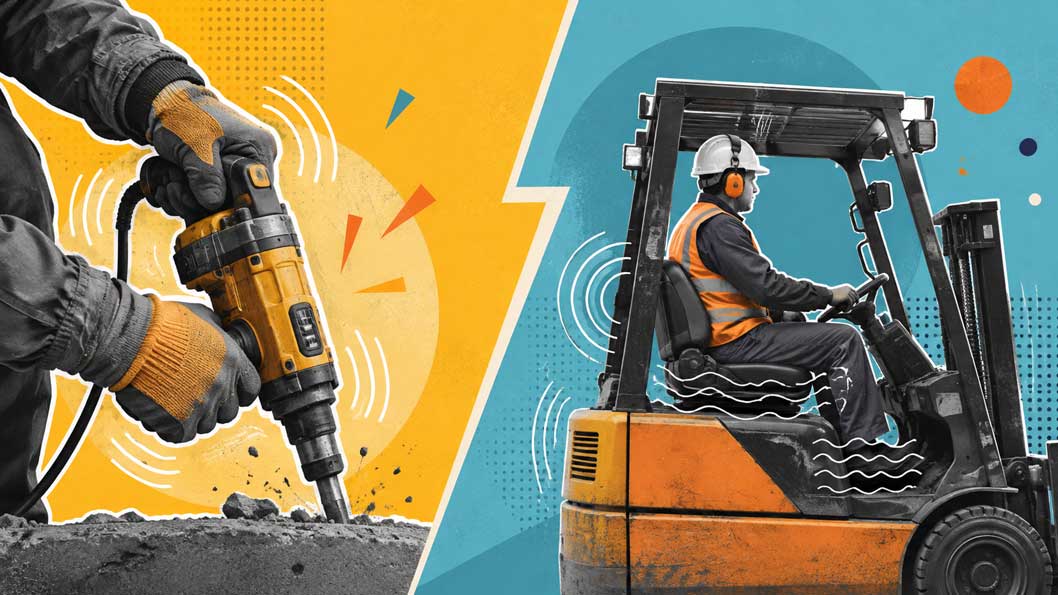
Workplace vibration is not a single risk. Employees may be exposed to hand-arm vibration through powered tools and machinery, whole-body vibration through vehicles and mobile plant, or both during the same working day.
Although both risks fall under the Control of Vibration at Work Regulations 2005, they affect the body differently and have separate exposure thresholds, health effects and control measures. Treating them as interchangeable can leave gaps in an employer’s vibration risk assessment.
This guide explains the difference between whole-body vibration and hand-arm vibration, who is most at risk, the legal exposure limits and the steps employers should take to manage each type of exposure.
Hand-arm vibration is vibration transmitted into the hands and arms when using hand-held, hand-guided or hand-fed tools and machinery.
Common sources include:
Regular or prolonged exposure can damage the nerves, blood vessels, muscles and joints in the hands and arms. This can lead to Hand-Arm Vibration Syndrome, commonly known as HAVS.
Symptoms may include tingling, numbness, reduced grip strength, loss of dexterity and vibration white finger. These effects can become permanent, so employers should identify and control exposure before workers begin to experience symptoms.
Workers in construction, manufacturing, rail, utilities, forestry, agriculture and grounds maintenance are among those most likely to be exposed, particularly where vibrating tools are used frequently or for long periods.
Whole-body vibration is transmitted through a worker’s seat, feet or other supporting surface. It is most commonly associated with driving or operating vehicles and mobile machinery, particularly over uneven or poorly maintained ground.
Common sources include:
Long-term or repeated exposure can contribute to lower-back pain and other musculoskeletal problems. The risk may be increased by poor posture, long periods of sitting, frequent jolts and shocks, manual handling, or pre-existing back conditions.
Workers in construction, agriculture, logistics, transport, mining and quarrying are among those most likely to be exposed, especially where vehicles are used for extended periods on rough terrain.
Although both forms of exposure are covered by the Control of Vibration at Work Regulations 2005, they affect workers differently and must be assessed separately.
Hand-arm vibration: Through the hands and arms.
Whole-body vibration: Through a seat, the feet or another supporting surface.
Hand-arm vibration: Powered tools and hand-guided machinery.
Whole-body vibration: Vehicles, mobile plant and machinery.
Hand-arm vibration: Hand-Arm Vibration Syndrome, vibration white finger and carpal tunnel syndrome.
Whole-body vibration: Lower-back pain and other musculoskeletal problems.
Hand-arm vibration: Employees who regularly operate powered tools.
Whole-body vibration: Drivers and operators of vehicles or mobile plant.
Hand-arm vibration: 2.5 m/s² A(8), equivalent to 100 HAV exposure points.
Whole-body vibration: 0.5 m/s² A(8).
Hand-arm vibration: 5.0 m/s² A(8), equivalent to 400 HAV exposure points.
Whole-body vibration: 1.15 m/s² A(8).
Hand-arm vibration: Health surveillance is required where employees remain at risk.
Whole-body vibration: There is no equivalent statutory WBV health surveillance programme, although employers should manage the wider risks of back pain and musculoskeletal injury.
The most important distinction is how vibration reaches the body. HAV exposure comes directly through the hands while using tools or machinery, whereas WBV is transmitted through a vehicle seat, the feet or another supporting surface.
The exposure thresholds are also different, so employers should not use the same assessment methods or control measures for both risks.
Yes. Some employees may be exposed to both types of vibration during the same working day.
For example, an excavator operator may experience whole-body vibration while driving mobile plant, then use a breaker or grinder that exposes their hands and arms to vibration. Grounds maintenance workers may operate ride-on machinery before switching to strimmers, hedge cutters or other powered tools.
Although both forms of exposure may occur on the same day, they must be assessed separately. HAV and WBV have different measurement methods, exposure thresholds and health effects, so the figures cannot simply be added together to create one overall vibration exposure score.
Employers should identify which activities create each type of risk and apply the appropriate controls to both.
The Control of Vibration at Work Regulations 2005 set separate daily Exposure Action Values and Exposure Limit Values for hand-arm vibration and whole-body vibration.
The Exposure Action Value is the level at which employers must introduce measures to reduce exposure. The Exposure Limit Value is the maximum daily exposure permitted and must not be exceeded.
For hand-arm vibration, the daily limits are:
Exposure Action Value: 2.5 m/s² A(8), equivalent to 100 HAV exposure points.
Exposure Limit Value: 5.0 m/s² A(8), equivalent to 400 HAV exposure points.
Reaching the action value does not mean exposure is safe up to that point. It means the employer must take practical steps to reduce the risk as far as reasonably practicable.
For whole-body vibration, the daily limits are:
Exposure Action Value: 0.5 m/s² A(8).
Exposure Limit Value: 1.15 m/s² A(8).
These figures are lower than the HAV limits because WBV is measured and assessed differently. Employers should therefore avoid comparing the figures directly or using the same calculation method for both risks.
Where exposure may reach the relevant action value, employers must assess the risk, introduce suitable controls and provide workers with appropriate information and training. Exposure above the limit value should be prevented.
Employers must assess and control vibration risks wherever workers may be exposed to hand-arm vibration, whole-body vibration or both.
This includes:
The required controls will depend on the type of vibration involved. HAV risks are usually managed through tool selection, maintenance, trigger-time reduction, worker training and health surveillance. WBV risks are more closely linked to vehicle condition, seating, driving speed, road surfaces, posture and the length of time spent operating machinery.
Employers should also keep suitable records to show how vibration risks have been assessed, what controls are in place and whether those controls remain effective.
Employers should first consider whether a task can be completed without using vibrating equipment. Where exposure cannot be eliminated, the aim should be to reduce it as far as reasonably practicable.
Practical control measures include:
Task rotation can help, but only where it genuinely reduces an individual worker’s exposure. Moving the same high-risk task between employees simply spreads the risk rather than controlling it.
Employers should also be cautious about relying entirely on manufacturers’ vibration figures or estimated tool-use times. Actual exposure can vary according to tool condition, the material being worked, operating technique and the time the tool is genuinely in use.
Whole-body vibration risk is often influenced by the condition of vehicles, the surfaces they travel over and how long workers spend operating them.
Practical control measures include:
A suspension seat can help reduce exposure, but only when it is appropriate for the vehicle and adjusted correctly. Poorly selected or incorrectly set seats may provide little benefit and can sometimes increase vibration at certain frequencies.
WBV should therefore be managed as part of a wider approach to reducing back pain and musculoskeletal risk, rather than treated as an isolated measurement exercise.
Hand-arm vibration exposure can vary significantly between workers, tools and tasks. Even when two employees use the same equipment, their actual exposure may differ depending on how long the tool is used, its condition, the material being worked and the way the task is carried out.
This makes HAV difficult to manage using estimates alone.
Traditional exposure records often rely on workers selecting the correct tool, recording trigger times or completing paperwork at the end of a shift. In busy working environments, this information can be missed, estimated inaccurately or entered inconsistently.
Tool-tagging systems can also create gaps. If a worker forgets to tag a tool, selects the wrong one or changes equipment during the day without updating the system, the resulting exposure record may no longer reflect what actually happened.
For employers, this can make it difficult to identify who is approaching the Exposure Action Value, whether controls are working and where higher-risk patterns are developing across the workforce.
Wearable HAV monitoring can give employers a clearer picture of personal exposure throughout the working day.
Rather than relying solely on estimated trigger times, manual records or workers selecting individual tools, a wrist-worn device can monitor exposure as employees move between tools, tasks and locations.
spacebands supports HAV risk management by providing:
This worker-level approach can reduce gaps caused by forgotten tool selections or inaccurate estimates. It also helps employers identify where exposure is occurring, which workers may require additional controls and whether those controls are reducing risk over time.
Whole-body vibration generally needs to be assessed through the condition of vehicles, seating, working surfaces and operating conditions. Hand-arm vibration, by contrast, can increasingly be monitored at the individual worker level throughout the day.
Hand-arm vibration and whole-body vibration are both covered by the Control of Vibration at Work Regulations 2005, but they should not be treated as the same risk.
Employers need to understand how vibration reaches the worker, which health effects are associated with it, which exposure limits apply and what controls are appropriate.
WBV is generally managed through vehicle selection, maintenance, seating, route conditions and working practices. HAV requires a stronger focus on tool use, individual exposure, health surveillance and accurate daily records.
For organisations with employees who regularly use powered tools, relying on estimated trigger times or incomplete tool records can make exposure harder to manage. Personal monitoring can provide a clearer picture of actual HAV exposure across the working day.
spacebands provides wrist-worn HAV monitoring without relying on manual trigger-time records or tool tagging.
Book a demo to see how spacebands can support your HAV risk management.
No. Hand-arm vibration is transmitted through the hands and arms when using powered tools or machinery. Whole-body vibration is transmitted through a seat, the feet or another supporting surface, usually when operating vehicles or mobile plant.
Yes. A worker may operate a vehicle or mobile machine and later use vibrating hand tools. The two types of exposure must be assessed separately because they have different measurement methods and legal thresholds.
The daily Exposure Action Value for hand-arm vibration is 2.5 m/s² A(8), equivalent to 100 HAV exposure points.
The daily Exposure Limit Value for hand-arm vibration is 5.0 m/s² A(8), equivalent to 400 HAV exposure points.
The daily Exposure Action Value for whole-body vibration is 0.5 m/s² A(8).
The daily Exposure Limit Value for whole-body vibration is 1.15 m/s² A(8).
There is no equivalent statutory WBV health-surveillance programme. Employers should instead manage WBV as part of their wider approach to back pain and musculoskeletal risk.
Not necessarily. HAV and WBV involve different transmission routes, measurement locations, frequency weightings and exposure thresholds. Monitoring equipment should be selected for the specific type of vibration being assessed.
Watch the online demo and see how wearable safety technology helps teams monitor exposure, reduce admin and prove risk is being managed.


We think you'll also find the articles below really useful
Join 5,000 H&S professionals and sign up for the spacebands monthly newsletter and get the latest blogs, free resources, tools, widgets and a dose of health & safety humour.
spacebands is a multi-sensor wearable that monitors external, environmental hazards, anticipates potential accidents, and gives real-time data on stress in hazardous environments.
