OUR CUSTOMERS

hand arm vibration MONITORING
Track HAVS Exposure in Real Time. No Tool Tagging.
A wrist-worn HAVS monitoring solution that automatically measures vibration exposure, calculates A(8), and alerts workers before EAV/ELV limits are reached.
- Continuous HAVS monitoring per worker
- Automatic A(8) calculation and exposure logs
- Real-time alerts before limits are exceeded
- Replace manual tracking and tool tagging
- Protect your team in line with HSE guidelines









Learn more
See how spacebands work

PRODUCT BENEFITS
Get a clear overview with our HAVS Monitoring Watch
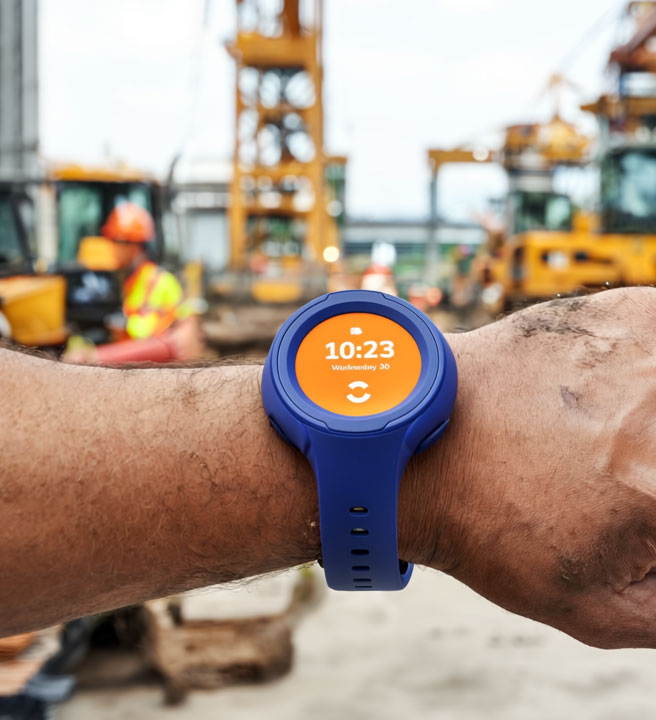
spacebands’ HAVS monitoring watch is a lightweight wristband that tracks vibration exposure in real time. It automatically alerts workers as they approach their EAV (Exposure Action Value) or ELV (Exposure Limit Value), helping teams stay within HSE limits.
Unlike manual logs or outdated hand arm vibration meters, our HAVS wrist monitor gives clear exposure data through an easy-to-use dashboard — broken down into low, medium, high, and severe thresholds.
This HAVS monitoring device makes compliance simple, reduces risk of HAVS claims, and keeps your workforce safe without complicated systems.
CUSTOMER FEEDBACK
Testimonials
spacebands is helping Health & Safety managers around the world reduce hand arm vibration exposure while providing a paper trail of exposure levels.

Nick S
Senior H&S Manager
spacebands has completely changed how we manage hand arm vibration exposure. Instead of chasing bits of paper and one-off HAVS meter readings, the HAVS monitoring watch gives us real-time A(8) data for every operator. We can see who is approaching EAV/ELV and take action before we breach our HSE limits.

Robert M
Health & Safety Manager
We used to rely on a traditional HAVS meter and manual logs. It was slow, reactive, and often out of date. With spacebands’ HAVS wrist monitor, exposure is tracked automatically across all tools. The dashboard gives us clear evidence for audits and has made HAVS compliance far easier to manage day to day.

Chris P
Plant Manager
The biggest win for us was visibility. The HAVS wearable monitor showed which tasks were really driving vibration exposure, not just what we assumed from risk assessments. That’s helped us reorganise work, rotate staff more intelligently, and reduce the risk of HAVS claims without slowing the job down.

David N
Site Manager
spacebands is a smarter alternative to a traditional HAVS meter. The team just wears the HAVS watch and it tracks their points and A(8) automatically. No tagging, no spreadsheets, no chasing readings. It’s given us confidence that we’re controlling hand arm vibration exposure properly and protecting our people.
one wearable protects staff from multiple hazards


FAQ
Frequently Asked Questions
spacebands are helping Health & Safety managers around the world reduce accidents, injuries and legal claims
Is staying beneath the exposure level (EAV/ELV) sufficient for compliance?
While staying below the EAV/ELV is a crucial step in ensuring worker safety, it doesn't guarantee complete compliance with occupational health and safety regulations.
Other factors that need to be considered include:
Risk assessment, PPE and emergency procedures.
spacebands HAVS feature is a great solution for monitoring exposure levels but alone it does not guarantee HSE compliance.
Do spacebands keep records for our insurance company?
All HAVS information is saved on each wearable device and uploaded to the analytics dashboard when the device is charged. Information is saved on the dashboard over time and you can look back at different date ranges and share this with your insurance company - only if you would like to do so!
Why does my company need a HAV monitoring device?
A HAV monitoring device can help your company to protect the health and safety of workers who use vibrating tools and equipment, comply with health and safety regulations, prevent work-related injuries and illnesses, and reduce workers' compensation costs.
Do you offer HAVS watch hire?
We provide subscription pricing per wearable device. This is to ensure users are upgraded to the latest firmware automatically. We have a range of subscription lengths available - get in touch for more info.
How accurate is a HAVS meter compared to spacebands?
A certified HAVS meter is accurate for one-off tool tests, but not for day-to-day monitoring.
spacebands continuously measures real-world vibration exposure, giving you live readings based on how long each worker actually uses each tool - far more representative than lab testing.
Can spacebands replace a HAVS meter entirely?
For everyday exposure tracking — yes.
spacebands replaces the need to manually test and log daily vibration levels. You may still use a HAVS meter for initial tool assessments, but spacebands covers everything else: continuous measurement, automatic logging, and exposure limit warnings.
Should workers be constantly monitored for HAVS when using machinery or equipment?
While regular monitoring for HAVS is important, it should be part of a comprehensive approach to preventing and managing the condition, including risk assessments, preventive measures, and regular health surveillance.
spacebands also monitor for loud noise exposure in addition to hand arm vibration.
What is a HAV monitoring device?
A Hand-Arm Vibration monitoring device is a tool used to measure the level of vibration emitted by tools and equipment used by workers, which can help to identify the risk of Hand-Arm Vibration Syndrome (HAVS). HAV devices can help employers to identify the risk of HAVS and implement appropriate preventive measures.
How accurate is the spacebands HAV monitoring device?
Each spacebands wearable uses a triaxial accelerometer to measure vibration exposure while tools are in use. The device continuously records vibration data and automatically calculates each worker’s daily A(8) exposure using recognised HAVS exposure assessment methods.
Unlike systems that estimate exposure using pre-set vibration values for specific tools, spacebands measures vibration experienced by the worker in real working conditions. This provides safety teams with a more realistic picture of daily exposure across multiple tools and tasks, with all data securely synced to the analytics dashboard for monitoring, reporting and compliance records.
What's the difference between a vibration meter and a vibration monitor?
Need a hand-arm vibration meter for engineering tests? Use a certified meter to measure tool magnitude.
spacebands is a wearable HAVS monitor (watch) for day-to-day work: it tracks A(8) & points, warns before EAV/ELV, and logs evidence for audits.
Do I need a HAVS meter to comply with HSE regulations?
You don’t need to own a traditional HAVS meter. What the HSE requires is proof that you’re assessing and managing exposure to hand-arm vibration.
spacebands automatically records vibration exposure for every worker, calculates A(8) values, and provides audit-ready reports - giving you compliance without the manual readings.