



spacebands is a multi-sensor wearable that monitors external, environmental hazards, anticipates potential accidents, and gives real-time data on stress in hazardous environments.
Members of:





Recognition:






For CMS Cepcor, managing hand–arm vibration exposure was never about ticking a box. It was about protecting skilled people doing demanding work, every day.
They knew manual logs and estimates were not enough. They needed accuracy, immediacy, and confidence. What followed was a shift from retrospective paperwork to proactive protection, with spacebands at the centre.

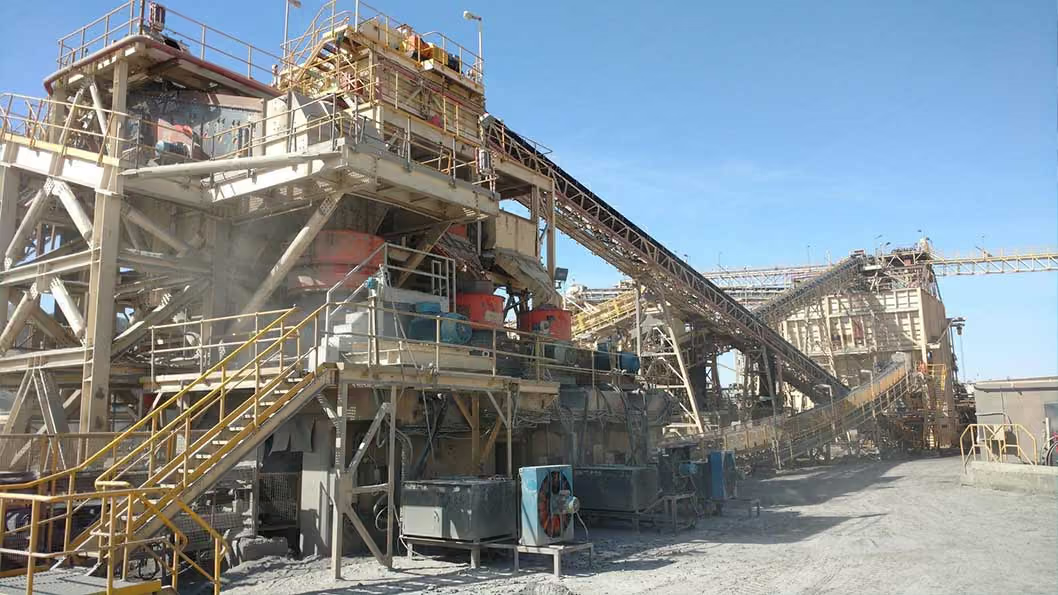
Before spacebands, CMS Cepcor relied on manual logs and estimated exposure levels. Operators used a wide range of tools across the day, which made it difficult to build a true picture of individual risk.
As they described it, the core issues were clear:
We had nothing that gave us actual real-world information from actual workplace situations. We knew we had to start by establishing a baseline for each employee, across their tasks and tools.
From the first introduction, spacebands felt different.
The design was practical. The purpose was clear. And critically, the data was immediate.
From the moment I saw spacebands, I knew they were a game-changer. The setup was straightforward, the devices were simple to use, and our team adapted within days.
There was some natural caution around how the technology would fit into existing processes. But that hesitation didn’t last long.
Instead of adding friction, spacebands streamlined their approach. Monitoring became part of the day, not an extra burden. Productivity remained intact. The data started flowing.
And with that data came clarity.
The difference was felt quickly.
Instead of reviewing logs after shifts had finished, CMS Cepcor could now:
One comment from the workforce stood out:
One of our operators told me he feels much more in control of his own safety now because the device alerts him in real time.
That sense of control matters. Safety stopped being something that happened to people, and became something they actively participated in.
Supervisors saw benefits too. Less time spent chasing paperwork. More time spent supporting safe, productive work.
Perhaps the biggest change wasn’t technological, but behavioural.
Before spacebands, the process looked like this:
Now, it looks very different:
We’ve moved from a reactive approach to a proactive one. Before, we were analysing logs after the fact. Now, we can act instantly to protect our staff.
That shift fundamentally changes the role of monitoring. It becomes preventative, not administrative.
The technical benefits are clear: accurate data, real-time insight, reduced risk of overexposure. But the human impact has been just as important.
CMS Cepcor describe:
The biggest benefit for us is the peace of mind. Knowing our team is protected and our monitoring is accurate. The crew feels safer, more confident, and more in control of their own health.
That kind of cultural shift doesn’t come from policies alone. It comes from tools that people trust and actually want to use.
Harry Kimberley-Bowen, Co-Founder of spacebands, said:
CMS Cepcor shows what happens when organisations stop relying on estimates and start working with real, live data. They’ve embedded monitoring into daily operations in a way that supports people rather than policing them. That’s exactly how technology should serve safety.
Without hesitation. Their advice to others is direct and grounded in experience:
Don’t wait until you have a vibration-related health issue in your team to take action. spacebands make it easy to manage HAV exposure in real time, protect your workforce, and save time on admin. I’d recommend them to anyone who takes safety seriously.
CMS Cepcor didn’t adopt spacebands to modernise their reporting.
They adopted it to protect their people.
What they gained was:
This is what proactive health protection looks like when it’s done properly.
