



spacebands is a multi-sensor wearable that monitors external, environmental hazards, anticipates potential accidents, and gives real-time data on stress in hazardous environments.
Members of:





Recognition:






Coachman used spacebands to identify high-risk tasks, improve tool use, and introduce safer processes, giving confidence to workers and defensible evidence to leadership.

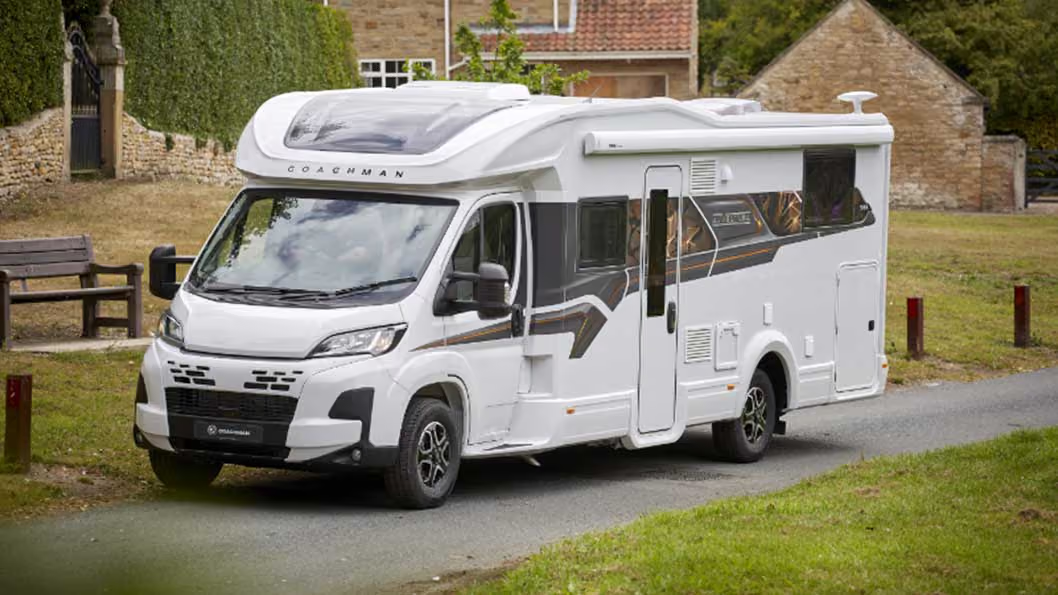
Coachman Caravans set out to solve a clear, practical challenge: understand real vibration exposure across their workforce and reduce the risk of long-term harm. What they uncovered went beyond measurement. It changed behaviours, improved processes, and gave confidence across every level of the organisation.
This is how they did it.
Before implementing spacebands, Coachman’s approach to vibration risk relied on manufacturer-published data and estimates. Useful in theory, but disconnected from reality on the workshop floor.
They had no reliable way to understand:
As their safety lead explained, the priority was clear:
We had nothing that gave us actual real-world information from actual workplace situations. We knew we had to start by establishing a baseline for each employee, across their tasks and tools.
Without that baseline, meaningful improvement was impossible.
Coachman explored other options, but flexibility was key.
They needed a solution that could:
spacebands stood out because it removed complexity rather than adding to it.
spacebands gave us the ability to measure various levels of exposure across various tools and tasks, without recalibrating or recalculating. And crucially, without negatively affecting production. We didn’t see that level of flexibility elsewhere.
Onboarding was straightforward. Setup was faster than expected. And while there was some initial scepticism at board level, that changed quickly once the first data arrived.
The impact was immediate.
Within the first days of use, Coachman identified:
None of this had been visible before.
With clear evidence, they acted quickly:
Instead of generic policy, they now had task-level, evidence-led control.
The most powerful outcome was not just insight, but change.
Coachman began actively using exposure data when:
The result was a clear, measurable reduction in exposure across the site:
That represents a 78% reduction in average daily exposure in less than a year.
This was achieved not through disruption, but through better decisions.
Beyond the numbers, the cultural impact has been just as important.
For operatives, there is reassurance that their health is being taken seriously and managed proactively. For leadership, there is confidence that risks are being addressed properly, with evidence to support every decision.
There is peace of mind for our operatives that we are acting in their best interests. And peace of mind for our Board that we are not going to be hit with a wave of HAVS claims, and that if we are, we have clear evidence showing how we have identified, managed and reduced risk.
That confidence changes the conversation around safety. It becomes proactive rather than defensive.
Harry Kimberley-Bowen, Co-Founder of spacebands, said:
Coachman is a brilliant example of what happens when organisations move from assumptions to evidence. They didn’t just collect data, they used it to change behaviours, improve processes and protect their people. A 78% reduction in exposure doesn’t happen by accident. It happens when the right data meets the right intent.
Unequivocally.
Why hesitate? As an organisation you have nothing to lose.
Vibration exposure often gets pushed down the priority list because monitoring feels complex and disruptive. spacebands is cost effective, easy to implement, and the data is presented in a straightforward format. Not only would I recommend it, I already have.
Coachman didn’t implement spacebands to tick a compliance box.
They implemented it to understand reality.
That understanding led to:
This is what data-led safety looks like in practice.
