OUR CUSTOMERS
for brokers, underwriters & claims teams
Turn workplace safety data into fewer claims and stronger underwriting
spacebands provides real-time vibration and noise exposure data from workers on site, helping insurers reduce risk, prevent claims and improve underwriting decisions.
Forward-thinking insurers are moving from passive risk transfer to active risk management. spacebands gives brokers, underwriters and claims teams real-time insight into workplace exposure risks so they can reduce losses before they occur.











from reactive to proactive
Why insurers are paying attention to exposure monitoring
Traditional insurance relies on historical claims data. But the biggest risks in industries like construction, utilities and manufacturing often develop slowly through unmonitored exposure to hazards like vibration and noise.
Without real-time data, insurers are effectively underwriting blind.
spacebands provides live exposure monitoring directly from the worker, giving insurers visibility into risks that were previously impossible to measure.
Enable smarter risk reduction for everyone, while boosting retention and reducing broker switching with flexible, global solutions.

How Spacebands works
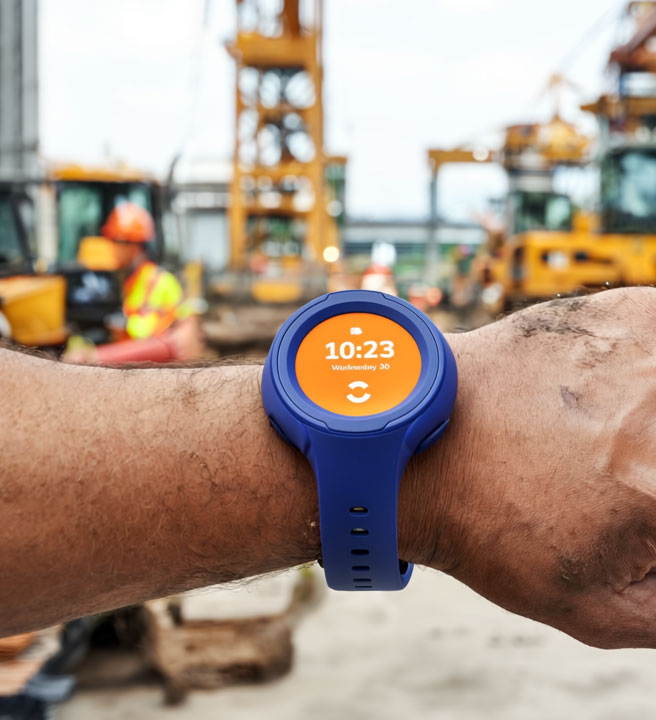
Real-time personal hand arm vibration, proximity and noise monitoring
spacebands is a wearable safety device that monitors worker exposure to key hazards such as vibration, proximity and noise.
The device provides:
- Real-time exposure alerts to workers
- Automatic exposure logging
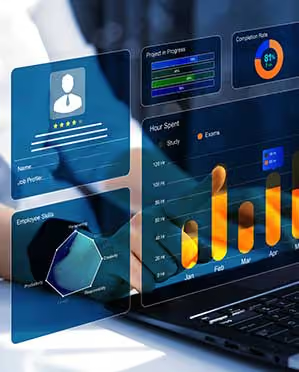
- Centralised dashboards for safety teams
- Evidence-based exposure records
This data can support insurers in understanding workplace risk and helping clients prevent costly claims.
spacebands usage
Where insurers are seeing the biggest impact
Industries with high exposure risks are particularly suited to monitoring technologies like spacebands.
These include:
- Construction
- Utilities and infrastructure
- Rail
- Manufacturing
- Heavy industry
In these sectors, occupational disease claims such as Hand-Arm Vibration Syndrome (HAVS) and noise-induced hearing loss can cost insurers millions.
Preventing exposure is far cheaper than paying claims.

Risk Management Evolution
The shift towards active risk management
For decades, insurers have relied on historical claims data to assess risk. But occupational disease claims such as Hand-Arm Vibration Syndrome and noise-induced hearing loss often develop slowly and are difficult to detect until significant damage has already occurred.
Forward-thinking insurers are now shifting towards active risk management. By using technology to monitor workplace exposure in real time, insurers can help their clients identify dangerous trends earlier, reduce long-tail claims and build stronger evidence when claims do occur.
spacebands enables this shift by turning worker exposure into measurable data that supports proactive risk reduction.
Risk Reduction Partnership
Explore partnership opportunities
Occupational disease claims are some of the most expensive and difficult risks for insurers to manage. Conditions such as Hand-Arm Vibration Syndrome and noise-induced hearing loss often take 10–20 years to develop, making them difficult to detect and defend once claims are filed.
Individual HAVS claims can exceed £100,000, and many exposure risks remain invisible without real-time monitoring.
spacebands helps insurers and their clients address these risks earlier by providing objective exposure data directly from the worker. This allows insurers to support proactive risk management, reduce long-tail claims and strengthen evidence when claims do occur.
We work with brokers, underwriters and claims teams to support safer workplaces while reducing costly occupational disease claims.

1 minute explainer
How spacebands helps insurers reduce risk

testimonials
Trusted by safety leaders managing real workplace risk
These organisations are already using spacebands to monitor vibration exposure and prevent occupational disease risks such as HAVS.

Nick S
Senior H&S Manager
spacebands has completely changed how we manage hand arm vibration exposure. Instead of chasing bits of paper and one-off HAVS meter readings, the HAVS monitoring watch gives us real-time A(8) data for every operator. We can see who is approaching EAV/ELV and take action before we breach our HSE limits.

Robert M
Health & Safety Manager
We used to rely on a traditional HAVS meter and manual logs. It was slow, reactive, and often out of date. With spacebands’ HAVS wrist monitor, exposure is tracked automatically across all tools. The dashboard gives us clear evidence for audits and has made HAVS compliance far easier to manage day to day.

Chris P
Plant Manager
The biggest win for us was visibility. The HAVS wearable monitor showed which tasks were really driving vibration exposure, not just what we assumed from risk assessments. That’s helped us reorganise work, rotate staff more intelligently, and reduce the risk of HAVS claims without slowing the job down.

David N
Site Manager
spacebands is a smarter alternative to a traditional HAVS meter. The team just wears the HAVS watch and it tracks their points and A(8) automatically. No tagging, no spreadsheets, no chasing readings. It’s given us confidence that we’re controlling hand arm vibration exposure properly and protecting our people.
FAQ
Frequently Asked Questions
spacebands are helping Health & Safety managers around the world reduce accidents, injuries and legal claims
How can exposure monitoring help insurers reduce claims?
Occupational diseases such as Hand-Arm Vibration Syndrome (HAVS) and noise-induced hearing loss often develop gradually over many years. Without exposure data, these risks can go unnoticed until claims arise.
spacebands provides real-time monitoring of worker exposure to vibration and noise, helping organisations identify risks earlier, adjust working practices and reduce the likelihood of long-term occupational disease claims.
Can exposure monitoring help with claims defensibility?
Yes. One of the biggest challenges with occupational disease claims is demonstrating what exposure levels workers actually experienced over time.
spacebands automatically records exposure data and creates an auditable record of worker activity. This can help organisations demonstrate that risks were monitored and managed appropriately.
Which industries benefit most from exposure monitoring?
Industries where workers regularly use power tools or operate in high-noise environments benefit most from exposure monitoring.
This commonly includes:
• Construction
• Infrastructure and utilities
• Rail
• Manufacturing
• Heavy industry
These sectors often carry higher risks of vibration and noise-related claims.
How does spacebands support underwriting decisions?
Underwriters often rely on historical claims data and limited site information when assessing risk.
Exposure monitoring provides objective data about how workers interact with tools and hazardous environments. This can help insurers better understand risk profiles, support proactive risk management programmes and encourage safer working practices across insured organisations.
What types of claims can exposure monitoring help prevent?
Exposure monitoring can help reduce risks associated with long-term occupational diseases such as:
• Hand-Arm Vibration Syndrome (HAVS)
• Noise-induced hearing loss
• Other exposure-related workplace health conditions
By identifying high exposure levels early, organisations can intervene before workers reach dangerous thresholds.
How can insurers partner with spacebands?
spacebands works with insurers, brokers and risk management teams to support proactive workplace safety programmes.
Partnership opportunities can include supporting insured organisations with exposure monitoring technology, improving risk visibility and helping reduce long-tail occupational disease claims.
If you are interested in exploring partnership opportunities, get in touch with our team.